infante
English
Etymology
From Spanish infante and Portuguese infante, both from Latin īnfāns (“child”). Cognate with infant and infantry.
Noun
infante (plural infantes)
Related terms
Translations
Part or all of this entry has been imported from the 1913 edition of Webster’s Dictionary, which is now free of copyright and hence in the public domain. The imported definitions may be significantly out of date, and any more recent senses may be completely missing.
(See the entry for infante in Webster’s Revised Unabridged Dictionary, G. & C. Merriam, 1913.)
Anagrams
Interlingua
Noun
infante (plural infantes)
Italian
Etymology
Pronunciation
Audio (file)
Adjective
infante (masculine and feminine plural infanti)
- (dated, rare) infant (attr.)
Noun
infante m, f (plural infanti)
Synonyms
Noun
infante f (plural infanti)
- infanta (in Spain & Portugal)
Derived terms
Anagrams
Latin
Noun
īnfante
- ablative singular of īnfāns
Old Portuguese
Etymology
Pronunciation
- IPA(key): /ĩ.ˈfan.te/
Noun
infante
- (rare) child
- prince, infante
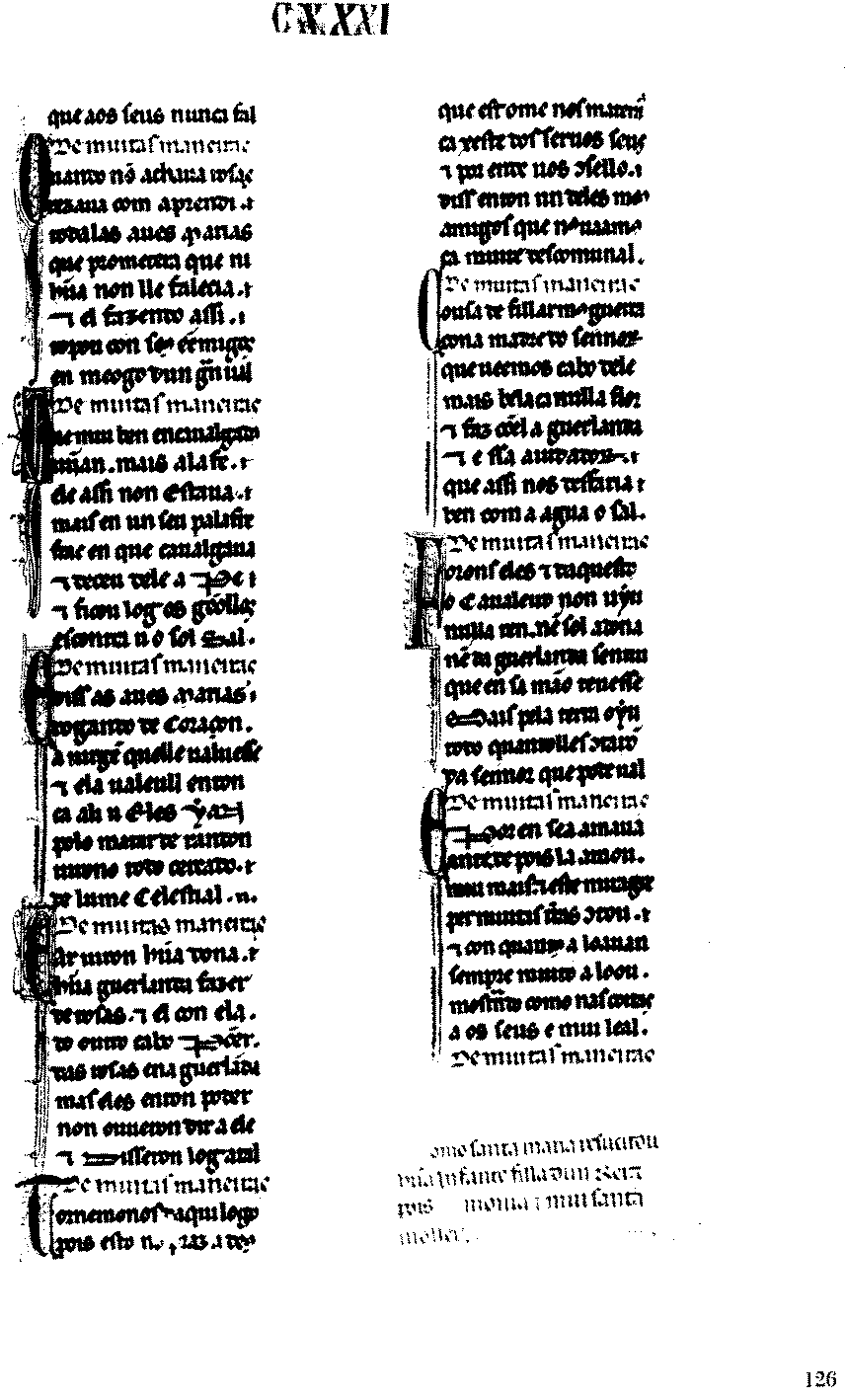
- 13th century, attributed to Alfonso X of Castile, Cantigas de Santa Maria, E codex, cantiga 122 (facsimile):
- Como ſanta maria reſucitou hũa infante filla dun Rei
- How Holy Mary resurrected the daughter of a King.
- 13th century, attributed to Alfonso X of Castile, Cantigas de Santa Maria, E codex, cantiga 122 (facsimile):
Descendants
Portuguese
Alternative forms
Etymology
From Old Portuguese infante, from Latin infans, infantem (“infant”).
Cognate with Galician infante, Spanish infante, French enfant and Italian infante.
Pronunciation
Noun
infante m (plural infantes, feminine infanta, feminine plural infantas)
Adjective
infante m, f (plural infantes, comparable)
Spanish
Etymology
From an alteration of Old Spanish ifante, from Latin īnfāns, īnfāntem.
Noun
infante m (plural infantes)