høg
Danish
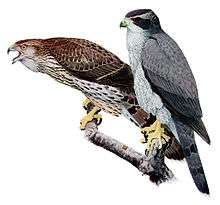
Høge (Accipiter gentilis)
Etymology
From Old Danish høk, from Old Norse haukr (“hawk”), from Proto-Germanic *habukaz, probably ultimately derived from Proto-Indo-European *keh₂p- (“seize”).
Pronunciation
- IPA(key): /høːɡ/, [høːˀj]
Noun
høg c (singular definite høgen, plural indefinite høge)
Inflection
See also

Norwegian Nynorsk
Etymology
From Old Norse hár via Middle Norwegian høg, from Proto-Germanic *hauhaz, from Proto-Indo-European *kewk-, a suffixed form of *kew-. Compare Swedish hög, Danish høj, English high.
Pronunciation
- IPA(key): /høːɡ/ (example of pronunciation)
Adjective
høg (masculine and feminine høg, neuter høgt, definite singular and plural høge, comparative høgre/høgare, indefinite superlative høgst/høgast, definite superlative høgste/høgaste)
Antonyms
Derived terms
Related terms
See also
- høy (Bokmål)
References
- “høg” in The Nynorsk Dictionary.
This article is issued from
Wiktionary.
The text is licensed under Creative Commons - Attribution - Sharealike.
Additional terms may apply for the media files.