ee
English
Pronunciation
- Rhymes: -iː
Etymology 1
Noun
ee (plural een)
- (Scotland, Northern England and archaic) An eye.
- 1815, Sir Walter Scott, Guy Mannering
- […] and he never took his ee aff them, or said another word […]
- 1815, Sir Walter Scott, Guy Mannering
References
- A Dictionary of North East Dialect, Bill Griffiths, 2005, Northumbria University Press, →ISBN
Etymology 2
Interjection
ee
- (Northern England) eh
- 1975, R. Chetwynd-Hayes, The Werewolf and the Vampire
- Father advanced with outstretched hand and announced in a loud, very hearty voice: "Ee, I'm pleased to meet ye, lad. […]
- 2008, Mavis Crawley, The Rolling Stone: Based on the True Story of My Life
- 'Ee by gum lass we've seen nought of thee this many a long year, thou's a sight for sore eyes,' he said planting a kiss firmly on Mum's cheek...
- 1975, R. Chetwynd-Hayes, The Werewolf and the Vampire
Etymology 3
Noun
ee (plural ees)
Dutch
Noun
ee f (uncountable)
Related terms
Estonian
Noun
ee (genitive [please provide], partitive [please provide])
Finnish
Pronunciation
- IPA(key): /ˈeː/
- Rhymes: -eː
Noun
ee
Declension
| Inflection of ee (Kotus type 18/maa, no gradation) | |||
|---|---|---|---|
| nominative | ee | eet | |
| genitive | een | eiden eitten | |
| partitive | eetä | eitä | |
| illative | eehen | eihin | |
| singular | plural | ||
| nominative | ee | eet | |
| accusative | nom. | ee | eet |
| gen. | een | ||
| genitive | een | eiden eitten | |
| partitive | eetä | eitä | |
| inessive | eessä | eissä | |
| elative | eestä | eistä | |
| illative | eehen | eihin | |
| adessive | eellä | eillä | |
| ablative | eeltä | eiltä | |
| allative | eelle | eille | |
| essive | eenä | einä | |
| translative | eeksi | eiksi | |
| instructive | — | ein | |
| abessive | eettä | eittä | |
| comitative | — | eineen | |
Luo
Pronunciation
- IPA(key): /e.e/
Interjection
ee
Manx
Etymology 1
Pronoun
ee (emphatic eeish or ish)
- she, her
- As ta'n chooid share jeh nagh vel ee ny ben Vanninagh.
- The beauty of it is that she is not Manx.
- Ben vie thie ee.
- She is a good housekeeper.
- Cha dooar ee eh.
- She didn't find it.
- Cha nel ee agh ny lhiannoo.
- She is but a child.
- Er leshyn dy row ee nane jeh e chaarjyn.
- He counted her among his friends.
- Hug eh fo obbeeys ee.
- He bewitched her.
- Ren eh smeidey stiagh ee.
- He beckoned her in.
-
- it (referring to a feminine noun)
- Cha jargym fakin ee.
- I can't see it.
-
Etymology 2
From Old Irish ithid, from Proto-Celtic *ɸiteti, from Proto-Indo-European *peyt-.
Verb
ee (future independent eeee, verbal noun ee, present participle gee, past participle eeit)
- to eat
Middle English
Alternative forms
Etymology
From Old English ēa, ǣ.
Noun
ee
- Alternative form of æ
Scots
Etymology 1
From (Anglian) Old English ēġe.
Noun
ee (plural een)
Etymology 2
From Old English ġē.
Pronoun
ee (personal, non-emphatic)
See also
Swahili
Interjection
ee
Tswana
Pronunciation
- IPA(key): /ˈe.ɪ/
Interjection
ee
Tukudede
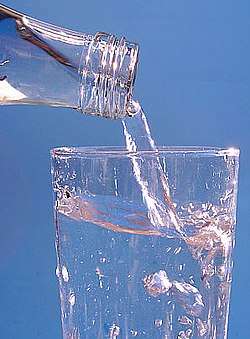
ee
Etymology
From Proto-Central-Eastern Malayo-Polynesian *waiʀ, from Proto-Malayo-Polynesian *wahiʀ.
Noun
ee
- water (clear liquid H₂O)
Võro
Noun
ee (genitive [please provide], partitive [please provide])
Inflection
This noun needs an inflection-table template.
This article is issued from
Wiktionary.
The text is licensed under Creative Commons - Attribution - Sharealike.
Additional terms may apply for the media files.