dragée
English
Etymology
Pronunciation
- IPA(key): /dɹæˈʒeɪ/
Noun
dragée (plural dragées)
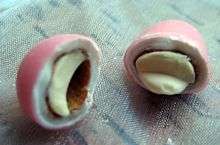
- A sweet or confection, originally used to administer drugs, medicine, etc.
- 1971, Anthony Burgess, M/F (Penguin 2004), page 129:
- I opened the cupboard and found a bag of raisins, two empty sauce bottles, a packet of icing sugar, a tube of dragées and a paper packet of candles.
- 1971, Anthony Burgess, M/F (Penguin 2004), page 129:
Translations
a sweet or confection, originally used to administer drugs, medicine, etc.
Anagrams
French
FWOTD – 31 January 2015
Etymology
From Old French dragie, via Latin tragēmata, from Ancient Greek τραγήματα (tragḗmata, “dried fruits, sweetmeats”), plural of τράγημα (trágēma).
Pronunciation
- IPA(key): /dʁa.ʒe/
-
Audio (Paris) (file)
Noun
dragée f (plural dragées)
- a sweet with almond filling
- 1923, Gustave Fraipont, Les Vosges:
- […] mais quel pavage désagréable ! je le recommande aux gens qui ont les pieds sensibles ! on dirait des dragées et des pralines posées sur un champ... Aïe !
- 1923, Gustave Fraipont, Les Vosges:
- a dragée, a sugar-coated pill
- (slang) a bullet
Descendants
Further reading
- “dragée” in le Trésor de la langue française informatisé (The Digitized Treasury of the French Language).
Anagrams
This article is issued from
Wiktionary.
The text is licensed under Creative Commons - Attribution - Sharealike.
Additional terms may apply for the media files.