ding
English
Pronunciation
Etymology 1
From Middle English dingen, dyngen (strong verb), from Old English *dingan (“to ding”), from Proto-Germanic *dingwaną (“to beat”), from Proto-Indo-European *dʰen- (“to beat, push”). Related to Old English dengan (“to ding, beat, strike”, weak verb) and Old Norse dengja (“to hammer”, weak verb); both from Proto-Germanic *dangijaną (“to beat, hammer, peen”), causative of *dingwaną. Cognate with Icelandic dengja (“to hammer”), Swedish dänga (“to bang, beat”), Danish dænge (“to bang, beat”), German tengeln, dengeln (“to peen”).
Noun
ding (plural dings)
- (informal) Very minor damage, a small dent or chip.
- 2007 September, “Ding Repairs”, BBC Wales, archived on 5 October 2014:
- If you surf regularly, then you're going to ding your board. Here's a rough guide on how to repair them... If the ding is on the rail, run tape across the ding conforming to the rail curve, leaving a gap to pour in resin and make sure it is sealed to prevent resin escaping and forming dribbles.
- 2007 September, “Ding Repairs”, BBC Wales, archived on 5 October 2014:
- (colloquial) A rejection.
- I just got my first ding letter.
Translations
Verb
ding (third-person singular simple present dings, present participle dinging, simple past dinged or (obsolete) dang, past participle dinged or (obsolete) dung)
- (transitive) To hit or strike.
- To dash; to throw violently.
- Milton
- to ding the book a coit's distance from him
- Milton
- (transitive) To inflict minor damage upon, especially by hitting or striking.
- 2007 September, “Ding Repairs”, BBC Wales, archived on 5 October 2014:
- If you surf regularly, then you're going to ding your board.
- 2007 September, “Ding Repairs”, BBC Wales, archived on 5 October 2014:
- (transitive, colloquial) To fire or reject.
- His top school dinged him last week.
- (transitive, colloquial) To deduct, as points, from another, in the manner of a penalty; to penalize.
- My bank dinged me three bucks for using their competitor's ATM.
- 2015 August 7, Ron Lieber, “Bringing paternity leave into the mainstream [print version: Paid leave expands for fathers, but will there be any takers?, International New York Times, 10 August 2015, p. 14]”, in The New York Times:
- […] [E]mployees don't feel like they're going to get dinged on performance reviews because they had the same goals as a guy who had been there all 12 months with no leave.
- (transitive, golf) To mishit (a golf ball).
Derived terms
Translations
|
|
See also
Etymology 2
Onomatopoeic. Compare ding-dong,
Noun
ding (plural dings)
- The high-pitched resonant sound of a bell.
Translations
|
Verb
ding (third-person singular simple present dings, present participle dinging, simple past and past participle dinged)
- (intransitive) To make high-pitched sound like a bell.
- Washington Irving
- The fretful tinkling of the convent bell evermore dinging among the mountain echoes.
- Washington Irving
- (transitive) To keep repeating; impress by reiteration, with reference to the monotonous striking of a bell.
- 1884, Oswald Crawfurd, English comic dramatists:
- If I'm to have any good, let it come of itself; not keep dinging it, dinging it into one so.
- 1884, Oswald Crawfurd, English comic dramatists:
- (intransitive, colloquial, role-playing games, especially video games) To level up
See also
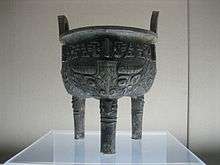
Etymology 3
Romanized from Mandarin 鼎 (dǐng).
Alternative forms
Noun
ding (plural dings)
Afrikaans
Etymology
From Dutch ding, from Old Dutch thing, from Proto-Germanic *þingą.
Noun
ding (plural dinge)
Dutch
Pronunciation
- IPA(key): /dɪŋ/
- Rhymes: -ɪŋ
audio (file)
Etymology 1
From Middle Dutch dinc, from Old Dutch thing, from Proto-Germanic *þingą.
Noun
ding n (plural dingen, diminutive dingetje n)
Derived terms
Descendants
Etymology 2
See etymology on the main entry.
Verb
ding
Irish
Pronunciation
- IPA(key): /dʲɪɲ/, /dʲɪɲɟ/
Etymology 1
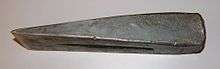
From Old Irish ding (“wedge”).
Noun
ding f (genitive singular dinge, nominative plural dingeacha)
Declension
Second declension
|
Bare forms
|
Forms with the definite article
|
Synonyms
- (both senses): ginn (Cois Fharraige)
Derived terms
- dingchruthach (“wedge-shaped, cuneiform”, adjective)
- dingeach (“wedge(-shaped)”, adjective)
- dingeán m (“dike”)
- dingín m (diminutive of ding)
Etymology 2
From Old Irish dingid (“press, force”), from Proto-Celtic *dingeti (“knead, form, press”), from Proto-Indo-European *dʰinéǵʰti, nasal infix present of *dʰeyǵʰ- (“to knead, form”).
Verb
ding (present analytic dingeann, future analytic dingfidh, verbal noun dingeadh, past participle dingthe)
Conjugation
| singular | plural | relative | autonomous | ||||||
|---|---|---|---|---|---|---|---|---|---|
| first | second | third | first | second | third | ||||
| indicative | present | dingim | dingeann tú; dingir† |
dingeann sé, sí | dingimid | dingeann sibh | dingeann siad; dingid† |
a dhingeann; a dhingeas / a ndingeann*; a ndingeas* |
dingtear |
| past | dhing mé; dhingeas | dhing tú; dhingis | dhing sé, sí | dhingeamar; dhing muid | dhing sibh; dhingeabhair | dhing siad; dhingeadar | a dhing / ar dhing* |
dingeadh | |
| past habitual | dhinginn | dhingteá | dhingeadh sé, sí | dhingimis; dhingeadh muid | dhingeadh sibh | dhingidís; dhingeadh siad | a dhingeadh / ar dhingeadh* |
dhingtí | |
| future | dingfidh mé; dingfead |
dingfidh tú; dingfir† |
dingfidh sé, sí | dingfimid; dingfidh muid |
dingfidh sibh | dingfidh siad; dingfid† |
a dhingfidh; a dhingfeas / a ndingfidh*; a ndingfeas* |
dingfear | |
| conditional | dhingfinn | dhingfeá | dhingfeadh sé, sí | dhingfimis; dhingfeadh muid | dhingfeadh sibh | dhingfidís; dhingfeadh siad | a dhingfeadh / ar dhingfeadh* |
dhingfí | |
| subjunctive | present | go ndinge mé; go ndingead† |
go ndinge tú; go ndingir† |
go ndinge sé, sí | go ndingimid; go ndinge muid |
go ndinge sibh | go ndinge siad; go ndingid† |
— | go ndingtear |
| past | dá ndinginn | dá ndingteá | dá ndingeadh sé, sí | dá ndingimis; dá ndingeadh muid |
dá ndingeadh sibh | dá ndingidís; dá ndingeadh siad |
— | dá ndingtí | |
| imperative | dingim | ding | dingeadh sé, sí | dingimis | dingigí; dingidh† |
dingidís | — | dingtear | |
| verbal noun | dingeadh | ||||||||
| past participle | dingthe | ||||||||
* Indirect relative
† Archaic or dialect form
Derived terms
- dingire m (“wedging implement; light hammer”)
Related terms
- dingireacht f (“wedge-driving; tapping”)
Etymology 3
Noun
ding f (genitive singular dinge, nominative plural dingeacha)
Declension
Second declension
|
Bare forms
|
Forms with the definite article
|
Verb
ding (present analytic dingeann, future analytic dingfidh, verbal noun dingeadh, past participle dingthe)
- (transitive) dint
Conjugation
| singular | plural | relative | autonomous | ||||||
|---|---|---|---|---|---|---|---|---|---|
| first | second | third | first | second | third | ||||
| indicative | present | dingim | dingeann tú; dingir† |
dingeann sé, sí | dingimid | dingeann sibh | dingeann siad; dingid† |
a dhingeann; a dhingeas / a ndingeann*; a ndingeas* |
dingtear |
| past | dhing mé; dhingeas | dhing tú; dhingis | dhing sé, sí | dhingeamar; dhing muid | dhing sibh; dhingeabhair | dhing siad; dhingeadar | a dhing / ar dhing* |
dingeadh | |
| past habitual | dhinginn | dhingteá | dhingeadh sé, sí | dhingimis; dhingeadh muid | dhingeadh sibh | dhingidís; dhingeadh siad | a dhingeadh / ar dhingeadh* |
dhingtí | |
| future | dingfidh mé; dingfead |
dingfidh tú; dingfir† |
dingfidh sé, sí | dingfimid; dingfidh muid |
dingfidh sibh | dingfidh siad; dingfid† |
a dhingfidh; a dhingfeas / a ndingfidh*; a ndingfeas* |
dingfear | |
| conditional | dhingfinn | dhingfeá | dhingfeadh sé, sí | dhingfimis; dhingfeadh muid | dhingfeadh sibh | dhingfidís; dhingfeadh siad | a dhingfeadh / ar dhingfeadh* |
dhingfí | |
| subjunctive | present | go ndinge mé; go ndingead† |
go ndinge tú; go ndingir† |
go ndinge sé, sí | go ndingimid; go ndinge muid |
go ndinge sibh | go ndinge siad; go ndingid† |
— | go ndingtear |
| past | dá ndinginn | dá ndingteá | dá ndingeadh sé, sí | dá ndingimis; dá ndingeadh muid |
dá ndingeadh sibh | dá ndingidís; dá ndingeadh siad |
— | dá ndingtí | |
| imperative | dingim | ding | dingeadh sé, sí | dingimis | dingigí; dingidh† |
dingidís | — | dingtear | |
| verbal noun | dingeadh | ||||||||
| past participle | dingthe | ||||||||
* Indirect relative
† Archaic or dialect form
Mutation
| Irish mutation | ||
|---|---|---|
| Radical | Lenition | Eclipsis |
| ding | dhing | nding |
| Note: Some of these forms may be hypothetical. Not every possible mutated form of every word actually occurs. | ||
Further reading
- "ding" in Foclóir Gaeilge-Béarla, An Gúm, 1977, by Niall Ó Dónaill.
- “ding” in Dictionary of the Irish Language, Royal Irish Academy, 1913–76.
- “dingid” in Dictionary of the Irish Language, Royal Irish Academy, 1913–76.
Mandarin
Romanization
ding
- Nonstandard spelling of dīng.
- Nonstandard spelling of díng.
- Nonstandard spelling of dǐng.
- Nonstandard spelling of dìng.
Usage notes
- English transcriptions of Mandarin speech often fail to distinguish between the critical tonal differences employed in the Mandarin language, using words such as this one without the appropriate indication of tone.
Scots
Etymology
Probably from Old Norse dengja (“to beat, thrash”). Cognate with Swedish dänga, Danish dænge.
Pronunciation
- IPA(key): /dɪŋ/
Verb
ding (third-person singular present dings, present participle dingin, past dang, past participle dung)