cousa
Asturian
Noun
cousa f (plural couses)
- Alternative form of cosa
Galician
Etymology
Pronunciation
- IPA(key): [ˈkows̺ɐ]
Noun
cousa f (plural cousas)
Latin
Participle
coūsa
- nominative feminine singular of coūsus
- nominative neuter plural of coūsus
- accusative neuter plural of coūsus
- vocative feminine singular of coūsus
- vocative neuter plural of coūsus
coūsā
- ablative feminine singular of coūsus
Mirandese
Noun
cousa f (plural cousas)
Old Portuguese
Etymology
From Medieval Latin causa (“thing”), from Classical Latin causa (“cause, reason”).
Pronunciation
- IPA(key): /ˈkow.za/
Noun
cousa f
- thing
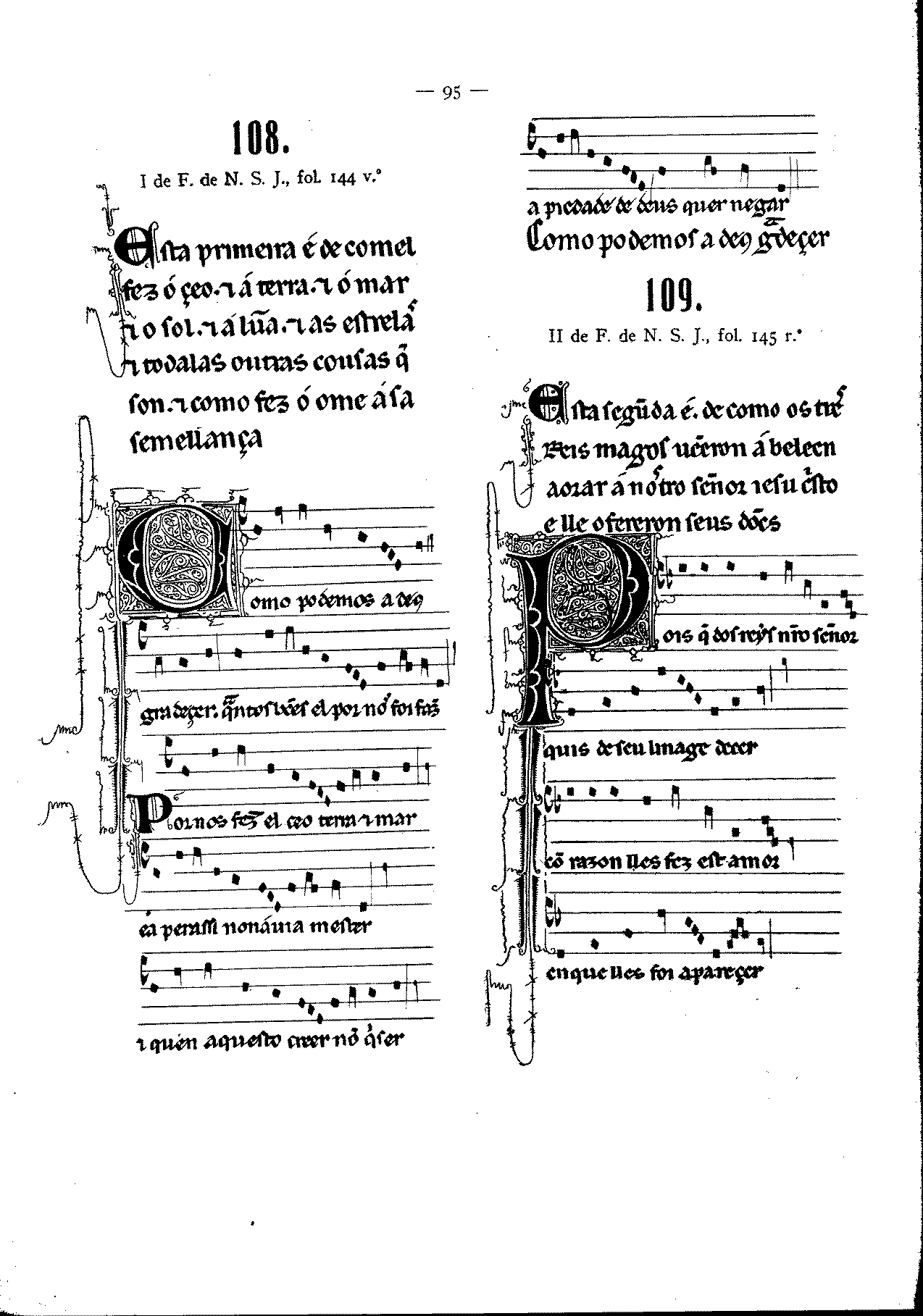
- 13th century, attributed to Alfonso X of Castile, Cantigas de Santa Maria, To codex, cantiga 423 (facsimile):
- Eſta primeira é de comel fez ó çeo. ⁊ á terra. ⁊ ó mar ⁊ o ſol. ⁊ á lũa. ⁊ as eſtrelas ⁊ todalas outras couſas q̇ ſon. ⁊ como fez ó ome áſa ſemellança
- This first one is (about) how He made the heaven, and the earth, and the sea, and the sun, and the moon, and the stars, and everything else that exists. And how (He) made man in His own likeness.
- Eſta primeira é de comel fez ó çeo. ⁊ á terra. ⁊ ó mar ⁊ o ſol. ⁊ á lũa. ⁊ as eſtrelas ⁊ todalas outras couſas q̇ ſon. ⁊ como fez ó ome áſa ſemellança
- 13th century, attributed to Alfonso X of Castile, Cantigas de Santa Maria, To codex, cantiga 423 (facsimile):
Descendants
Portuguese
Pronunciation
- (Portugal) IPA(key): /ˈkow.zɐ/
- Hyphenation: cou‧sa
Noun
cousa f (plural cousas)
- (dated) Alternative form of coisa
- 1595, Luís Vaz de Camões, Rimas, “Transforma-se o amador na cousa amada”:
- Transforma-se o amador na cousa amada
- The lover becomes the thing he loves
- Transforma-se o amador na cousa amada
- 1595, Luís Vaz de Camões, Rimas, “Transforma-se o amador na cousa amada”:
This article is issued from
Wiktionary.
The text is licensed under Creative Commons - Attribution - Sharealike.
Additional terms may apply for the media files.