chevalier
English
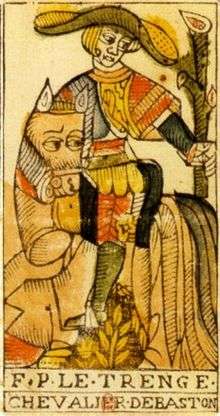
Tarot: The chevalier of batons
Etymology
From Middle English chivaler or chevaler, from Anglo-Norman chevaler or chivaler, later refashioned after French chevalier, from Late Latin caballarius, from Latin caballus.[1] Doublet of cavalier.
Pronunciation
- Rhymes: -ɪə(ɹ)
Noun
chevalier (plural chevaliers)
References
- ↑ “chevalier”, in OED Online

French
Etymology
From Middle French chevalier, from Old French chevalier, from Late Latin caballārius, from Latin caballus. Doublet of cavalier.
Pronunciation
- IPA(key): /ʃə.va.lje/
-
audio (file) - Rhymes: -je
Noun
chevalier m (plural chevaliers)
Derived terms
Derived terms
- chevalier blanc
- chevalier d'honneur
- chevalier d'industrie
- chevalier du guet
Related terms
Descendants
- Turkish: şövalye
Further reading
- “chevalier” in le Trésor de la langue française informatisé (The Digitized Treasury of the French Language).
Middle French
Etymology
From Old French chevalier.
Noun
chevalier m (plural chevaliers)
Related terms
Descendants
- French: chevalier
Old French
Alternative forms
Etymology
From Late Latin caballārius, from Latin caballus.[1] Compare Old Occitan cavalier.
Noun
chevalier m (oblique plural chevaliers, nominative singular chevaliers, nominative plural chevalier)
Descendants
References
- ↑ Migliorini, Bruno; Aldo Duro (1950), “cavaliere”, in Prontuario etimologico della lingua italiana (in Italian), Paravia
This article is issued from
Wiktionary.
The text is licensed under Creative Commons - Attribution - Sharealike.
Additional terms may apply for the media files.