chef
English
Etymology
Borrowed from French chef (from the positions of chef d'office and chef de cuisine),[1] from Old French chief (“head, leader”) (English chief), from Vulgar Latin *capum (“head”) (from which also captain, chieftain), from Latin caput (“head”) (English cap (“head covering”)), from Proto-Indo-European *kauput- (English head).
Pronunciation
- IPA(key): /ʃɛf/
- Rhymes: -ɛf
Noun
chef (plural chefs)
- The presiding cook in the kitchen of a large household.
- <1845, R. H. Barham, Blasphemer's Warning in Ingoldsby Legends (1847), 3rd Ser., 245
- The Chef's peace of mind was restor'd, And in due time a banquet was placed on the board.
- <1845, R. H. Barham, Blasphemer's Warning in Ingoldsby Legends (1847), 3rd Ser., 245
- The head cook of a restaurant or other establishment.
- 1849, Thackeray, Pendennis (1850), I. xxviii. 266
- The angry little chef of Sir Francis Clavering's culinary establishment.
- 1849, Thackeray, Pendennis (1850), I. xxviii. 266
- Any cook.
- Kiss the chef. (slogan on aprons used by home barbecue enthusiasts)
- (slang) One who manufactures illegal drugs; a cook.
- 1998, SPIN (volume 14, number 3, page 100)
- But trying to stop all the nation's meth chefs makes as much sense as building a wall along the Mexican border.
- 2013, Mike Power, Drugs 2.0
- Owsley Stanley, the world's most exacting and prolific LSD chef who supplied the majority of America's West Coast with LSD in the 1960s, claimed he made so much acid not because he wanted to change the world, but rather because it was almost impossible not to make vast quantities of the drug once the synthesis had been embarked upon.
- 1998, SPIN (volume 14, number 3, page 100)
- (historical) A reliquary in the shape of a head.
Usage notes
When used in reference to a cook with no sous-chefs or other workers beneath him, the term connotes a certain degree of prestige—whether culinary education or ability—distinguishing the chef from a “cook”. As a borrowing, chef was originally italicized, but such treatment is now obsolete.
Synonyms
- (head cook): cook
Translations
|
|
References
- ↑ "chef, n." in the Oxford English Dictionary.
Danish
Etymology
Pronunciation
- IPA(key): [ˈɕɛːˀf]
Noun
chef c (singular definite chefen, plural indefinite chefer)
- A boss; person in charge, person who directly oversees the work being done
Dutch
Etymology
Pronunciation
chef (file) - Rhymes: -ɛf
Noun
chef m (plural chefs, diminutive chefje n, feminine cheffin)
Derived terms
- chefkok m
- sergeant-chef m
- stationchef m
French
Etymology
From Middle French chief, from Old French chief, from Vulgar Latin *capum, from Latin caput (“head”), from Proto-Italic *kaput, ultimately from Proto-Indo-European *kauput-, *kaput-. Doublet of cap.
Pronunciation
Noun
chef m (plural chefs)

- (now literary) head
- opiner du chef
- to nod
- article, principal point.
- Les principaux chefs d’une demande.
- (please add an English translation of this usage example)
- principal motive
- Le procureur a tenu à refaire une lecture des chefs d’accusation.
- (please add an English translation of this usage example)
- (heraldry) chief; top third of a coat of arms
Derived terms
|
|
Noun
chef m (plural chefs, feminine cheffe)
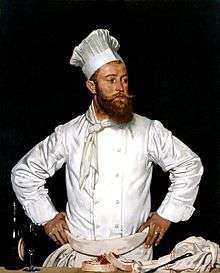
- A boss, chief, leader.
- Le pape est le chef de l’Église.
- The pope is the head of the church.
- A culinary chef, chief cook
- Créant dans des établissements de prestige de nombreuses recettes reprises ensuite par d'autres chefs, Escoffier a fait connaitre internationalement la cuisine française.
- (please add an English translation of this usage example)
Derived terms
|
|
|
Further reading
- “chef” in le Trésor de la langue française informatisé (The Digitized Treasury of the French Language).
Italian
Alternative forms
- scef (uncommon)
Etymology
Noun
chef m (invariable)
Norman
Etymology
From Old French chief, chef, from Vulgar Latin *capum, from Latin caput (“head”), from Proto-Indo-European *kauput-, *kaput-.
Noun
chef m (plural chefs)
Derived terms
- chef dé deu (“chief mourner”)
- chef dé musique (“conductor”)
Old French
Noun
chef m (oblique plural ches, nominative singular ches, nominative plural chef)
- Alternative form of chief
Portuguese
Etymology
Noun
chef m, f (plural chefs)
- chef (the head cook of an establishment such as a restaurant)
Romanian
Etymology
Noun
chef n (plural chefuri)
- (good) disposition, mood
- desire, wish
- (figuratively) appetite
- whim, caprice
- shindig, blowout,
- revelry, binge; by extension, drunkenness
See also
- (disposition) dispoziție
- (wish): dorință
- (appetite): poftă
- (caprice): capriciu, dambla
- (shindig): petrecere, zaiafet
- (drunkenness): beție
Spanish
Etymology
Noun
chef m, f (plural chef)
Swedish
Etymology
Pronunciation
- IPA(key): /ɧeːf/
audio (file)
Noun
chef c
- A boss; person in charge, person who directly oversees the work being done
Declension
| Declension of chef | ||||
|---|---|---|---|---|
| Singular | Plural | |||
| Indefinite | Definite | Indefinite | Definite | |
| Nominative | chef | chefen | chefer | cheferna |
| Genitive | chefs | chefens | chefers | chefernas |
Derived terms
- avdelningschef
- försäljningschef
- mellanchef