cape
English
Pronunciation
- enPR: kāp, IPA(key): /keɪp/
Audio (US) (file) - Rhymes: -eɪp
Etymology 1
Borrowed from Middle French cap, from Occitan cap, from Latin caput (“head”).
Noun
cape (plural capes)
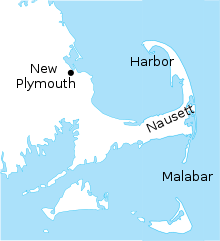
- (geography) A piece or point of land, extending beyond the adjacent coast into a sea or lake; a promontory; a headland.
Synonyms
Derived terms
Translations
|
|
Etymology 2
From Old English capa, from Late Latin cappa (“cape”).
Noun
cape (plural capes)
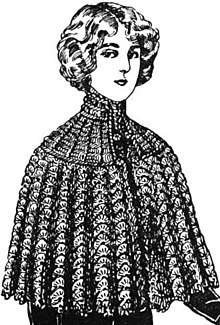
- A sleeveless garment or part of a garment, hanging from the neck over the back, arms, and shoulders, but not reaching below the hips.
- 1977, Agatha Christie, chapter 4, in An Autobiography, part II, London: Collins, →ISBN:
- Mind you, clothes were clothes in those days. […] Frills, ruffles, flounces, lace, complicated seams and gores: not only did they sweep the ground and have to be held up in one hand elegantly as you walked along, but they had little capes or coats or feather boas.
-
Translations
|
|
See also
Verb
cape (third-person singular simple present capes, present participle caping, simple past and past participle caped)
Etymology 3
From Middle English capen (“to stare, gape, look for, seek”), from Old English capian (“to look”), from Proto-Germanic *kapjaną. Cognate with German gaffen (“to stare at curiously, rubberneck”), Low German gapen (“to stare”). Related to keep.
Verb
cape (third-person singular simple present capes, present participle caping, simple past and past participle caped)
- (obsolete) To look for, search after.
- Long may they search ere that they find that they after cape.(Geoffrey Chaucer)
- (rare, dialectal or obsolete) To gaze or stare.
- The captain just caped mindlessly into the distance as his ship was hit by volley after volley.
- This Nicholas ever caped upward into the air.(Geoffrey Chaucer)
References
Anagrams
French
Etymology
Borrowed from Old Occitan capa, from Late Latin cappa (compare the inherited doublet chape; cf. also the Old Northern French variant cape).
Pronunciation
Noun
cape f (plural capes)
Verb
cape
Further reading
- “cape” in le Trésor de la langue française informatisé (The Digitized Treasury of the French Language).
Indonesian
Adjective
cape
- (slang) tired
Italian
Noun
cape f
- plural of capa
Anagrams
Latin
Verb
cape
- second-person singular present active imperative of capiō
References
- cape in Charles du Fresne du Cange’s Glossarium Mediæ et Infimæ Latinitatis (augmented edition, 1883–1887)
Neapolitan
Pronunciation
- IPA(key): /ˈkkapə/
Noun
cape f
- plural of capa
Norwegian Bokmål
Etymology
From English cape, from French cape, from Late Latin cappa. Cognate with kappe (“cloak”), kåpe (“cloak”), kapp (“cape, headland”).
Noun
cape m (definite singular capen, indefinite plural caper, definite plural capene)
- a cape (sleeveless garment worn by women, which covers the shoulders and arms)
References
Norwegian Nynorsk
Etymology
Noun
cape m (definite singular capen, indefinite plural capar, definite plural capane)
- a cape (sleeveless garment worn by women, which covers the shoulders and arms)
References
- “cape” in The Nynorsk Dictionary.
Portuguese
Pronunciation
- Rhymes: -api
Verb
cape
- first-person singular (eu) present subjunctive of capar
- third-person singular (ele and ela, also used with você and others) present subjunctive of capar
- third-person singular (você) affirmative imperative of capar
- third-person singular (você) negative imperative of capar
Spanish
Verb
cape
- First-person singular (yo) present subjunctive form of capar.
- Formal second-person singular (usted) present subjunctive form of capar.
- Third-person singular (él, ella, also used with usted?) present subjunctive form of capar.
- Formal second-person singular (usted) imperative form of capar.
Swedish
Noun
cape c
- cape (sleeveless garment used by women)
Declension
| Declension of cape | ||||
|---|---|---|---|---|
| Singular | Plural | |||
| Indefinite | Definite | Indefinite | Definite | |
| Nominative | cape | capeen | capeer | capeerna |
| Genitive | capes | capeens | capeers | capeernas |