barabara
Japanese
Romanization
barabara
Kikuyu
Etymology
Pronunciation
- IPA(key): /βàɾàβàɾàꜜ/
- As for Tonal Class, Benson (1964) classifies this term into Class 1 with a tetrasyllabic stem.
- (Kiambu)
- (Limuru) As for Tonal Class, Yukawa (1981) classifies this term into a group including cindano, huko, iburi, igego, igoti, ini (pl. mani), inooro, irigũ, irũa, iturubarĩ (pl. maturubarĩ), kĩbaata, kĩmũrĩ, kũgũrũ, mũciĩ, mũgeni, mũgũrũki, mũmbirarũ, mũndũ, mũri, mũthuuri, mwaki (“fire”), mwario (“way of speaking”), mbogoro, nda, ndaka, ndigiri, ngo, njagathi, njogu, nyondo (“breast(s)”), and so on.[2]
Noun
barabara class 9/10 (plural barabara)
References
- ↑ “barabara” in Benson, T.G. (1964). Kikuyu-English dictionary, p. 24. Oxford: Clarendon Press.
- ↑ Yukawa, Yasutoshi (1981). "A Tentative Tonal Analysis of Kikuyu Nouns: A Study of Limuru Dialect." In Journal of Asian and African Studies, No. 22, 75–123.
- ↑ Muiru, David N. (2007). Wĩrute Gĩgĩkũyũ: Marĩtwa Ma Gĩgĩkũyũ Mataũrĩtwo Na Gĩthũngũ, p. 18.
Swahili
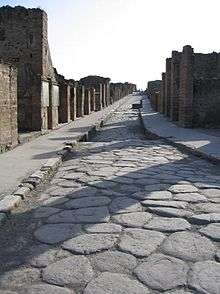
barabara
Etymology 1
Possibly from Arabic بَرّ (barr, “land, earth”).
Pronunciation
- IPA(key): /ɓɑrɑˈɓɑrɑ/
Noun
barabara (n class, plural barabara)
Descendants
- Kikuyu: barabara
Etymology 2
From Persian برابر (barābar).
Pronunciation
- IPA(key): /ɓɑˈrɑɓɑrɑ/
Adjective
barabara (invariable)
Adverb
barabara
This article is issued from
Wiktionary.
The text is licensed under Creative Commons - Attribution - Sharealike.
Additional terms may apply for the media files.