Sinae
See also: sinä
Latin
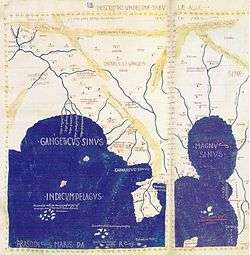
An early modern Latin map after Ptolemy, showing SINÆ on the Great Gulf at the eastern end of the landlocked Indian Ocean.
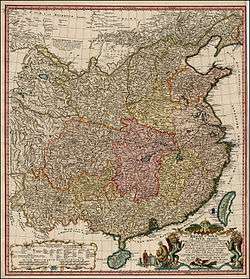
An 18th-century Latin map of China Proper (Sinæ Propriæ).
Etymology
From Ancient Greek Σῖναι (Sînai) of uncertain etymology, but probably from Sanskrit चीन (cīna, “China”), possibly via Arabic اَلصِّين (aṣ-ṣīn, “China; the Chinese”) and usually held to derive from Old Chinese 秦 (*Dzin, “Qin”). See "Names of China" at Wikipedia.
Pronunciation
- (Classical) IPA(key): /ˈsiː.nae̯/
Proper noun
Sīnae f pl (genitive Sīnārum, locative Sīnīs); first declension
- (culture) The Chinese, specifically:
- (Classical Latin) The southern Chinese: the Cantonese, Vietnamese, and other Yue peoples reached via the maritime Silk Road to Panyu (Guangzhou), not known at the time to be related to the Seres reached by the overland route to Chang'an (Xi'an).
- (New Latin) The Chinese people: the Han Chinese or citizens of China.
- (geography) The land of the Chinese, specifically:
Inflection
First declension.
| Case | Plural |
|---|---|
| nominative | Sīnae |
| genitive | Sīnārum |
| dative | Sīnīs |
| accusative | Sīnās |
| ablative | Sīnīs |
| vocative | Sīnae |
Synonyms
- (New Latin): Rēs Pūblica Populāris Sīnārum (usually), Rēs Pūblica Sīnārum (dated)
Derived terms
- Rēs Pūblica Populāris Sīnārum
- Rēs Pūblica Sīnārum
- sīno-
Descendants
See also
This article is issued from
Wiktionary.
The text is licensed under Creative Commons - Attribution - Sharealike.
Additional terms may apply for the media files.