Ohr
See also: Öhr
German
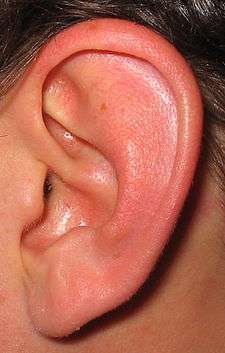
Ein menschliches Ohr — A human ear. (1)
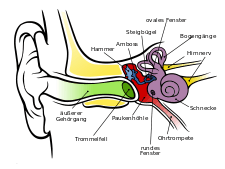
Ohr — ear (1, 2)

Ohr — interchange (4)
Etymology
From Old High German ōra, from the voiced Verner alternant of Proto-Germanic *ausô. Akin to Dutch oor, English ear, West Frisian ear, Swedish öra, all ultimately derived from Proto-Indo-European *h₂ows-.
Further Indo-European cognates: Latin auris, Lithuanian ausis, Ancient Greek οὖς (oûs), Russian у́хо (úxo), Old Armenian ունկն (unkn), Albanian vesh, Persian گوش (guš)
Pronunciation
- IPA(key): /oːr/, [oːɐ̯]
-
audio (file) - Rhymes: -oːɐ̯
Noun
Ohr n (genitive Ohrs or Ohres, plural Ohren, diminutive Öhrchen n)
- (anatomy, countable) The ear; the organ of hearing
- (anatomy, countable) The ear; the external visible part of the organ, the auricle
- (architecture) The overhanging part on the frame of a window or door.
- A highway interchange which is ear-shaped or ribbon-shaped.
Declension
Synonyms
- (part of interchange): Schleife f
Hypernyms
Hyponyms
- (ear): Trommelfell n, Ohrmuschel f
Derived terms
Terms derived from Ohr
|
|
|
Further reading
- Ohr in Duden online
Low German
Etymology
From Old Saxon ōra, from the voiced Verner alternant of Proto-Germanic *ausô, from Proto-Indo-European *h₂ows-.
Pronunciation
- IPA(key): /ˈɔu̯ɾ/
Noun
Ohr n (plural Ohren)
Pennsylvania German
Etymology
From Old High German ōra, from the voiced Verner alternant of Proto-Germanic *ausô, from Proto-Indo-European *h₂ows-. Compare German Ohr, Dutch oor, English ear.
Noun
Ohr n (plural Ohre)
- ear (hearing organ)
This article is issued from
Wiktionary.
The text is licensed under Creative Commons - Attribution - Sharealike.
Additional terms may apply for the media files.