Gnathostomata
Translingual
Etymology
From Ancient Greek γνάθος (gnáthos, “jaw”) + στόμα (stóma, “mouth”) + Latin -ata, neutral plural of suffix -atus, equivalent to -ate.
Proper noun
Gnathostomata
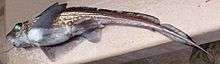
- A taxonomic infraphylum within the subphylum Vertebrata – those vertebrates that have jaws.[1]
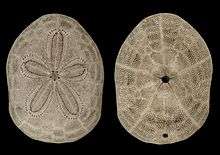
- A taxonomic superorder within the subclass Euechinoidea – some sea urchins, including the sand dollars.
Hypernyms
- (infraphylum): Eukaryota - superkingdom; Animalia - kingdom; (Eumetazoa - subkingdom;) Bilateria - subkingdom; (Nephrozoa - clade) Deuterostomia - infrakingdom; Chordata - phylum (≈ Chordata Craniata - clade); Vertebrata - subphylum[1]
Hyponyms
- (infraphylum): Actinopterygii, Sarcopterygii, Tetrapoda - superclasses[1]
- (superorder): Clypeasteroida, Holectypoida - orders
Coordinate terms
References
- (infraphylum):
-

-

-
- (superorder):
-
-
-
This article is issued from
Wiktionary.
The text is licensed under Creative Commons - Attribution - Sharealike.
Additional terms may apply for the media files.