鯰
| ||||||||
Translingual
Han character
鯰 (radical 195 魚+8, 19 strokes, cangjie input 弓火人戈心 (NFOIP), four-corner 28332, composition ⿰魚念)
References
- KangXi: not present, would follow page 1473, character 27
- Dai Kanwa Jiten: character 46285
- Dae Jaweon: page 2005, character 27
- Hanyu Da Zidian: volume 7, page 4697, character 13
- Unihan data for U+9BF0
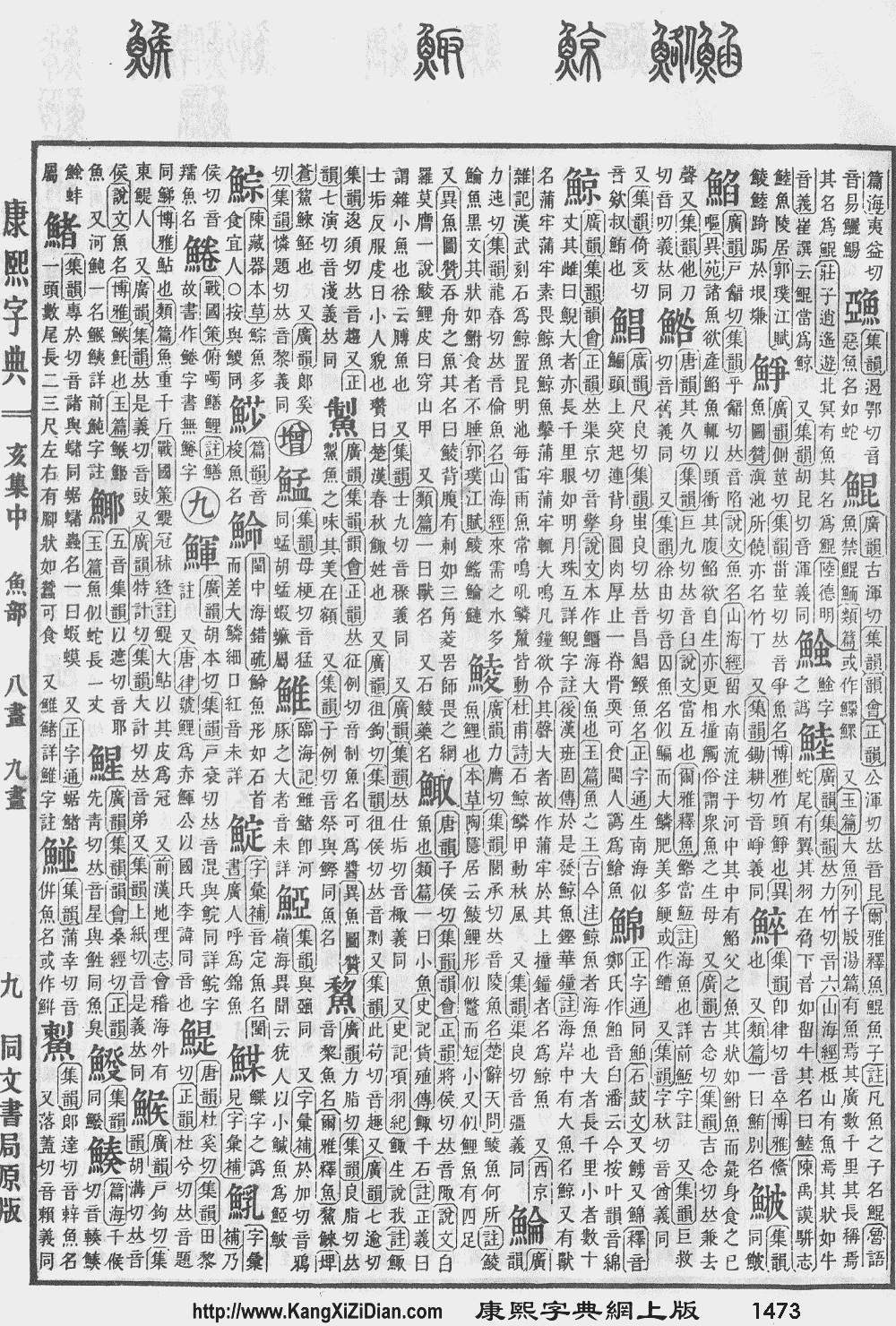
Chinese
| For pronunciation and definitions of 鯰 – see 鮎 (“fishes in Siluriformes, especially”). (This character, 鯰, is a variant form of 鮎.) |
Japanese
Glyph origin
Possibly invented in Japan,[1] using the 魚 radical on the left for its meaning of “fish”, and 念 on the right for its phonetic value as a homophone of 粘 (nen, “sticky; slimy”).
Kanji
鯰
- a catfish
Readings
Etymology
_-_Kawahara_Keiga_-_1823_-_1829_-_Siebold_Collection_-_pencil_drawing_-_water_colour.jpeg)
鯰 (namazu): a biologist's depiction of a Amur catfish (Japanese catfish).
| Kanji in this term |
|---|
| 鯰 |
| なまず Hyōgaiji |
| kun’yomi |
Possibly from 滑 (nama, “slippery, slimy”, possible ancient alternate for name reading) + 頭 (zu, “head”).
Pronunciation
Noun
鯰 (hiragana なまず, katakana ナマズ, rōmaji namazu, historical hiragana なまづ)
Usage notes
- As with many terms that name organisms, this term is often spelled in katakana, especially in biological contexts, as ナマズ.
Derived terms
Derived terms
- 上がり鯰 (agarinamazu)
- 痺鯰 (shibirenamazu)
- 電気鯰 (denkinamazu)
- 鯰尾 (namazuo)
- 鯰隈 (namazuguma)
- 鯰肌 (namazuhada)
- 鯰髭 (namazuhige)
- 鯰坊主 (namazubōzu)
- 瓢箪で鯰を押さえる (hyōtan de namazu o osaeru)
References
- ↑ 1995, 大辞泉 (Daijisen) (in Japanese), Tōkyō: Shogakukan, →ISBN
- ↑ 2006, 大辞林 (Daijirin), Third Edition (in Japanese), Tōkyō: Sanseidō, →ISBN
- ↑ 1998, NHK日本語発音アクセント辞典 (NHK Japanese Pronunciation Accent Dictionary) (in Japanese), Tōkyō: NHK, →ISBN
- ↑ 1997, 新明解国語辞典 (Shin Meikai Kokugo Jiten), Fifth Edition (in Japanese), Tōkyō: Sanseidō, →ISBN
This article is issued from
Wiktionary.
The text is licensed under Creative Commons - Attribution - Sharealike.
Additional terms may apply for the media files.