賛
| ||||||||
Translingual
| Traditional | 贊 |
|---|---|
| Shinjitai | 賛 |
| Simplified | 赞 |
Etymology
Japanese shinjitai character. Simplified from 贊 (兟 → 㚘).
Compare unrelated 替 (derived from 暜), with top component 㚘 simplified from 竝.
Han character
賛 (radical 154, 貝+8, 15 strokes, cangjie input 手人月山金 (QOBUC), composition ⿱㚘貝)
Derived characters
References
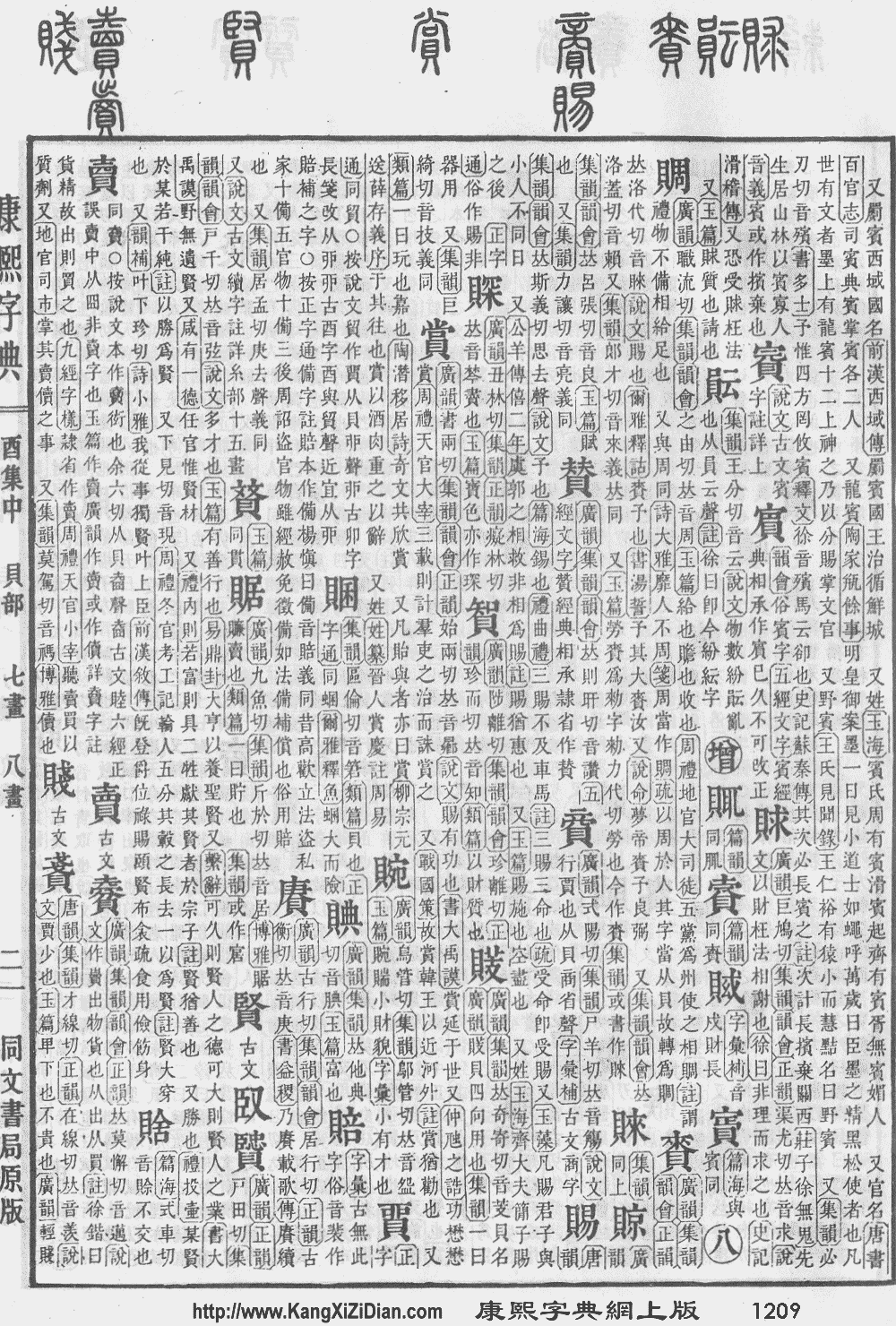
- KangXi: page 1209, character 13
- Dai Kanwa Jiten: character 36841
- Hanyu Da Zidian: volume 6, page 3645, character 5
- Unihan data for U+8CDB
Chinese
| For pronunciation and definitions of 賛 – see 贊 (“to help; to support; to agree”). (This character, 賛, is a variant form of 贊.) |
Usage notes
In the first batch of simplified Chinese characters (1935), it was originally proposed that the traditional character 贊 be simplified as this character. However, the final form of the simplified character approved in 1965 is written 赞 instead.
Japanese
| 賛 | |
| 贊 |
Kanji
賛
(grade 5 “Kyōiku” kanji, shinjitai kanji, kyūjitai form 贊)
Readings
Compounds
This article is issued from
Wiktionary.
The text is licensed under Creative Commons - Attribution - Sharealike.
Additional terms may apply for the media files.