螞
See also: 蚂
| ||||||||
Translingual
Han character
螞 (radical 142, 虫+10, 16 strokes, cangjie input 中戈尸手火 (LISQF), four-corner 51127, composition ⿰虫馬)
References
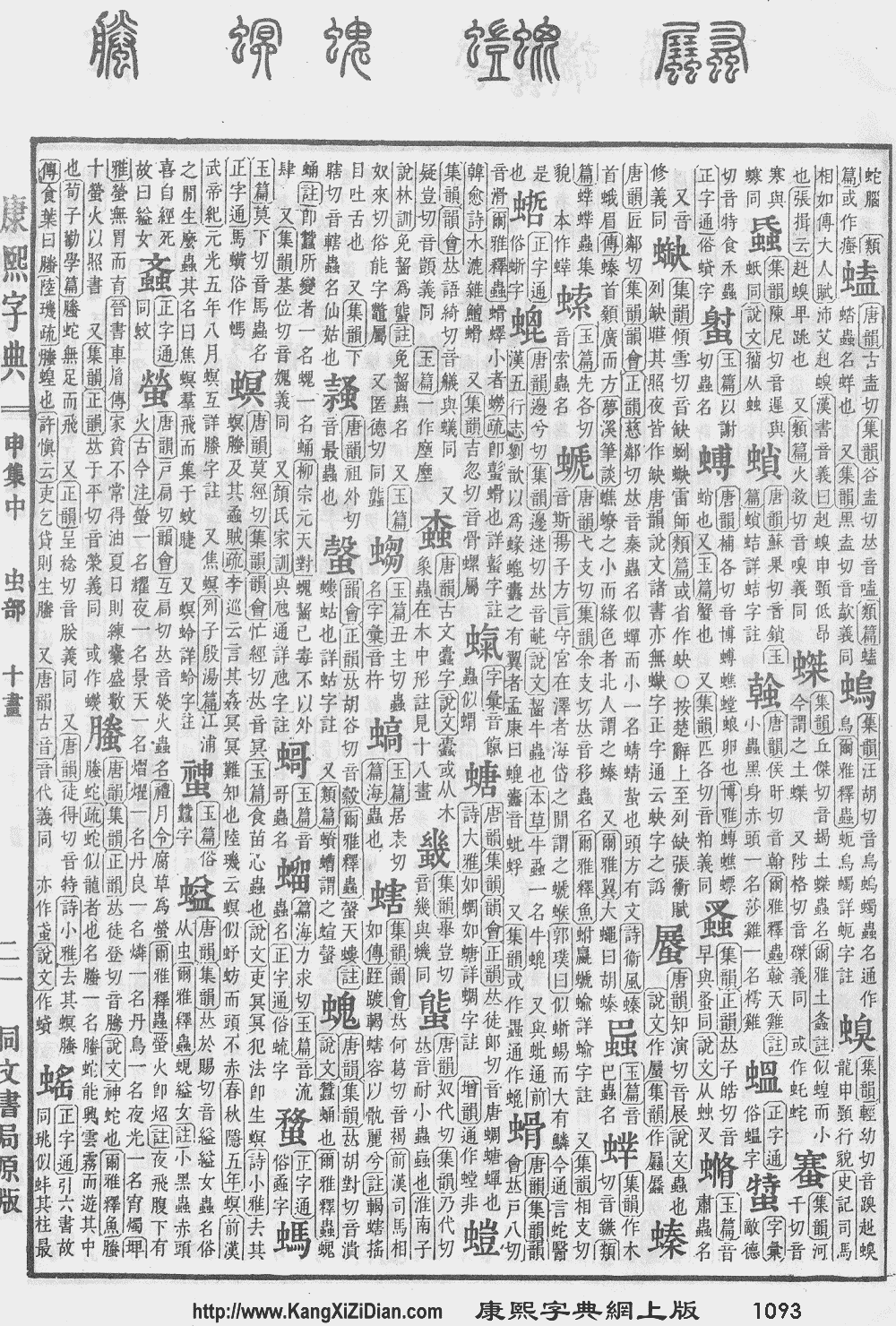
- KangXi: page 1093, character 40
- Dai Kanwa Jiten: character 33428
- Dae Jaweon: page 1558, character 28
- Hanyu Da Zidian: volume 4, page 2876, character 4
- Unihan data for U+879E
Chinese
| trad. | 螞 | |
|---|---|---|
| simp. | 蚂 | |
Glyph origin
Phono-semantic compound (形聲) : semantic 虫 (“insect”) + phonetic 馬 (OC *mraːʔ).
Etymology
Traditionally thought to be the same word as 馬 (OC *mraːʔ, “horse > big”).
Mei (1985) proposes that it is derived from 蝱 (OC *mraːŋ, “horsefly”), which he relates to Proto-Tai *m.leːŋᴬ (“insect”).
Pronunciation 1
Definitions
螞
Compounds
Pronunciation 2
Definitions
螞
Pronunciation 3
Definitions
螞
References
Japanese
Kanji
螞
- This term needs a translation to English. Please help out and add a translation, then remove the text
{{rfdef}}.
Readings
Korean
Hanja
螞 • (ma) (hangeul 마, revised ma, McCune–Reischauer ma, Yale ma)
Synonyms
Compounds
- 螞蟥 (마황, mahwang) horse-leech
Related terms
This article is issued from
Wiktionary.
The text is licensed under Creative Commons - Attribution - Sharealike.
Additional terms may apply for the media files.