脱
See also: 脫
| ||||||||
Translingual
Han character
脱 (radical 130 肉+7, 11 strokes, cangjie input 月金口山 (BCRU), composition ⿰⺼兑)
References
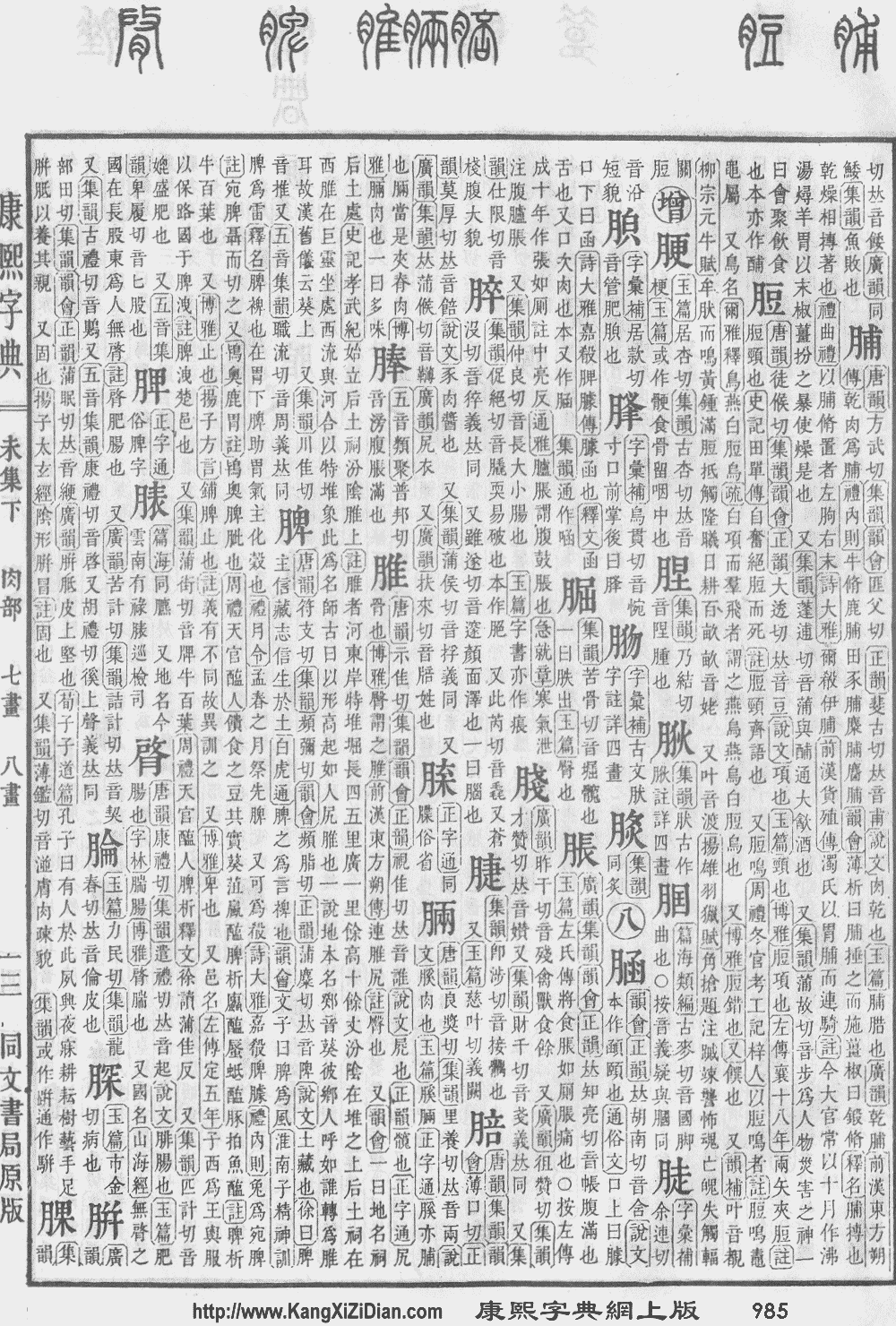
- KangXi: not present, would follow page 985, character 11
- Dai Kanwa Jiten: character 29539
- Hanyu Da Zidian: volume 3, page 2081, character 1
- Unihan data for U+8131
Chinese
| For pronunciation and definitions of 脱 – see 脫 (“to take off; to peel off; to strip; to get away from; to escape; to leave; to avoid; etc.”). (This character, 脱, is the simplified form of 脫.) |
Notes:
|
Japanese
Kanji
脱
(common “Jōyō” kanji, shinjitai kanji, kyūjitai form 脫)
Readings
Compounds
- 幽体離脱 (yūtai ridatsu): out-of-body experience
- 体外離脱 (taigai ridatsu): out-of-body experience
Prefix
脱 (hiragana だつ, rōmaji datsu-)
- de- (removal or reversal of something)
Korean
Hanja
脱 • (tal, tae) (hangeul 탈, 태, McCune–Reischauer t'al, t'ae, Yale thal, thay)
- This term needs a translation to English. Please help out and add a translation, then remove the text
{{rfdef}}.
This article is issued from
Wiktionary.
The text is licensed under Creative Commons - Attribution - Sharealike.
Additional terms may apply for the media files.