経
| ||||||||
Translingual
| Traditional | 經 |
|---|---|
| Shinjitai | 経 |
| Simplified | 经 |
Glyph origin
Simplified from 經 (巠 → 圣). Also a Japanese shinjitai. Current form 糸 + 圣, but not etymologically related to 圣.
Han character
経 (radical 120, 糸+5, 11 strokes, cangjie input 女火水土 (VFEG), composition ⿰糹圣)
References
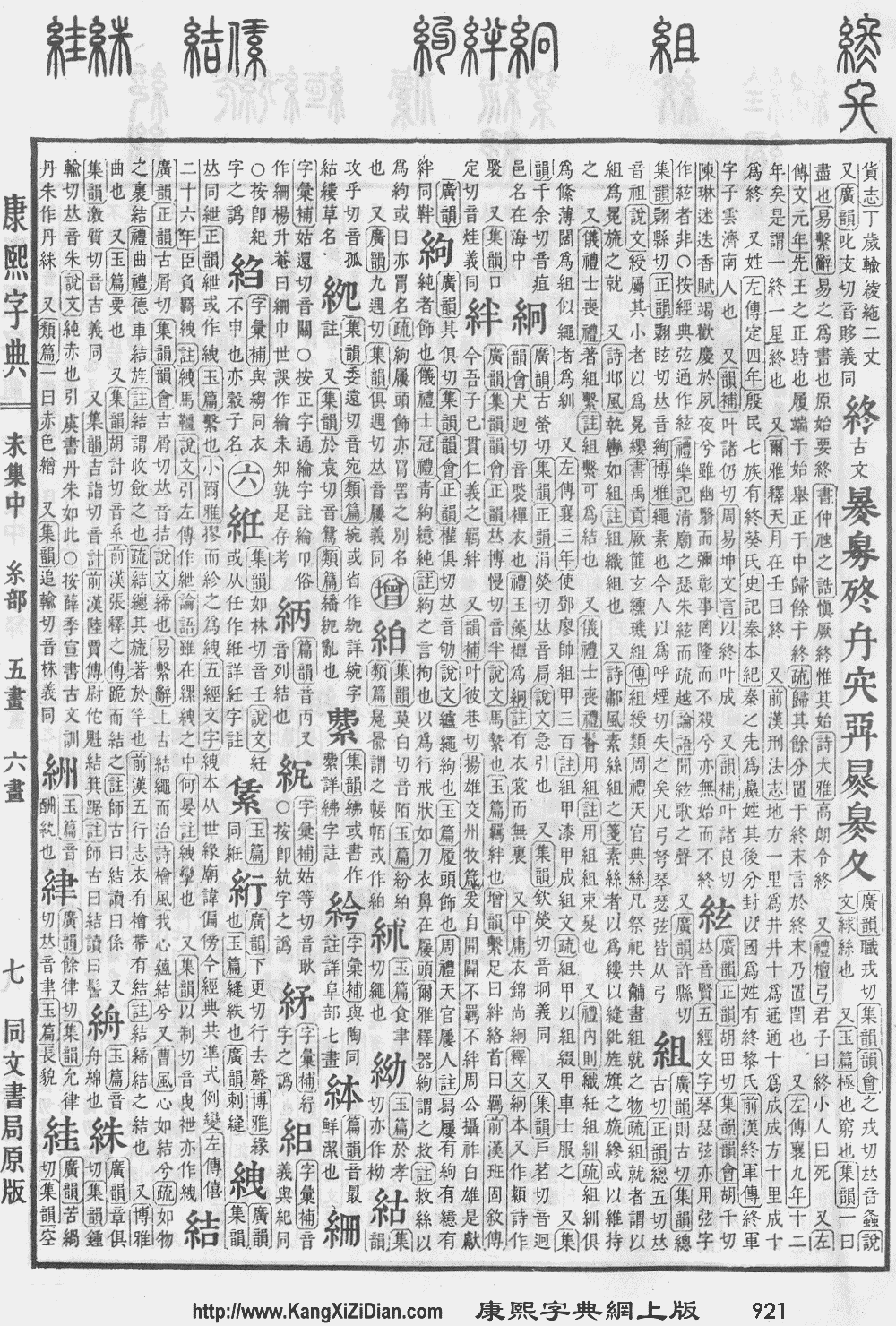
- KangXi: not present, would follow page 921, character 29
- Dai Kanwa Jiten: character 27392
- Dae Jaweon: page 1354, character 16
- Hanyu Da Zidian: not present, would follow volume 5, page 3388, character 7
- Unihan data for U+7D4C
Chinese
| For pronunciation and definitions of 経 – see 經 (“warp, a thread running lengthwise in a woven fabric; etc.”). (This character, 経, is a variant form of 經.) |
Japanese
| 経 | |
| 經 |
Kanji
(grade 5 “Kyōiku” kanji, shinjitai kanji, kyūjitai form 經)
- warp (thread running lengthwise)
- longitude
- meridian (in traditional Chinese medicine)
- elapse, pass through
- manage
- hang (by the neck)
- ordinary, usual
- scripture, sutra
- menstruation
Readings
Compounds
- 経衣 (kyōe)
- 経行 (kyōgyō)
- 経紙 (kyōshi)
- 経蔵 (Kyōzō)
- 経典 (kyōten)
- 経文 (kyōmon)
- 経絡系 (keirakukei): the meridian system
- 経緯 (keii)
- 経営 (keiei)
- 経過 (keika)
- 経験 (keiken): experience
- 経口 (keikō)
- 経国 (keikoku)
- 経済 (keizai)
- 経死 (keishi)
- 経書 (keisho)
- 経渉 (keishō)
- 経常 (keijō)
- 経線 (keisen)
- 経典 (keiten)
- 経度 (keido)
- 経費 (keihi)
- 経閉 (keihei)
- 経由 (keiyu), 経由 (keiyū)
- 経絡 (keiraku)
- 経理 (keiri)
- 経略 (keiryaku)
- 経歴 (keireki)
- 経路 (keiro)
- 経行 (kinhin)
- 一日経 (ichinichikyō): dead memorial service where many gather to transcribe a sutra in one day
- 易経 (Ekikyō)
- 看経 (kankyō), 看経 (kankin), 看経 (kangin)
- 観経 (kangyō)
- 偽経 (gikyō)
- 近経 (kinkei)
- 銀経 (ginkei)
- 弘経 (gukyō)
- 五経 (Gokyō)
- 古経 (kokyō)
- 三部経 (Sanbu-kyō)
- 詩経 (Shikyō)
- 写経 (shakyō)
- 書経 (Shokyō)
- 心経 (Shingyō)
- 西経 (seikei)
- 東経 (tōkei)
- 道徳経 (Dōtokukyō)
- 読経 (dokyō), 読経 (dokkyō)
- 秘経 (hikyō)
- 諷経 (fugin)
- 閉経 (heikei)
- 六経 (Rikukei), 六経 (Rikkei), 六経 (Rokkei)
- 経緯 (ikisatsu)
Etymology 1
| Kanji in this term |
|---|
| 経 |
| きょう Grade: 5 |
| on’yomi |
/kʲeu/ → /kjau/ → /kjɔː/ → /kjoː/
From Middle Chinese 經 (MC keŋ, keŋH). The goon reading, so likely the initial borrowing.
The Buddhist senses are a translation of Sanskrit सूत्र (sūtra, literally “string, thread”)[1][2] or Pali sutta (literally “string, thread”).
Pronunciation
Noun
経 (shinjitai kanji, kyūjitai kanji 經, hiragana きょう, rōmaji kyō, historical hiragana きやう)
- (Buddhism) a sutra (Buddhist scripture):
- a discourse of the Gautama Buddha, one of the Twelve Divisions of Mahayana Buddhism
- Hypernym: 十二分経 (Jūni-bu-kyō)
- Short for 経蔵 (Kyōzō): the Sutta Pitaka, one of the three divisions of the Tripitaka
- Hypernym: 三蔵 (Sanzō)
- collective term for Buddhist literature including sutras in general
- a discourse of the Gautama Buddha, one of the Twelve Divisions of Mahayana Buddhism
- a scripture in religions other than Buddhism
Synonyms
- (sutra): 御経 (o-kyō), スートラ (sūtora)
- (discourse of the Buddha; division of Tripitaka): 契経 (kaikyō)
Derived terms
- 経帷子 (kyō-katabira)
- 経紙 (kyōgami)
- 経木 (kyōgi)
- 御経 (o-kyō)
Proper noun
経 (shinjitai kanji, kyūjitai kanji 經, hiragana きょう, rōmaji Kyō, historical hiragana きやう)
- a surname
- a unisex given name.
Etymology 2
| Kanji in this term |
|---|
| 経 |
| けい Grade: 5 |
| on’yomi |
From Middle Chinese 經 (MC keŋ, keŋH). The kan'on reading, so likely a later borrowing.
Pronunciation
Noun
経 (shinjitai kanji, kyūjitai kanji 經, hiragana けい, rōmaji kei)
Proper noun
経 (shinjitai kanji, kyūjitai kanji 經, hiragana けい, rōmaji Kei)
- a surname
- a unisex given name.
Etymology 3
| Kanji in this term |
|---|
| 経 |
| たて Grade: 5 |
| kun’yomi |
From Old Japanese.
The 連用形 (ren'yōkei, “stem or continuative form”) of verb 経つ (tatsu, “to elapse; to burn out, said of a candle or oil”), itself cognate with 立つ (tatsu, “to stand”).[1][2]
Pronunciation
Noun
経 (shinjitai kanji, kyūjitai kanji 經, hiragana たて, rōmaji tate)
- Alternative spelling of 縦 (tate): a warp (thread running lengthwise in a woven fabric); the length, height, distance, or direction between up and down, above and below, or north and south; a hierarchy
- Short for 経糸 (tateito): a warp (thread running lengthwise in a woven fabric)
- c. 759, Man'yōshū (book 8, poem 1512), text here
- 經毛無緯毛不定未通女等之織黄葉尓霜莫零 [Man'yōgana]
- 経もなく緯も定めず娘子らが織る黄葉に霜な降りそね [Modern spelling]
- tate mo naku nuki mo sadamezu otomera ga oru momichi-ba ni shimo na-furi-so ne
- Not even vertical threads, nor crossthreads having been fixed on the momidi woven thus by the heavenly girls, please do not leat hoarfrost fall down! (because the colour would change)[3]
- c. 759, Man'yōshū (book 8, poem 1512), text here
Derived terms
Proper noun
経 (shinjitai kanji, kyūjitai kanji 經, hiragana たて, rōmaji Tate)
- a surname
Etymology 4
| Kanji in this term |
|---|
| 経 |
| たていと Grade: 5 |
| kun’yomi |
Pronunciation
Noun
経 (shinjitai kanji, kyūjitai kanji 經, hiragana たていと, rōmaji tateito)
Etymology 5
| Kanji in this term |
|---|
| 経 |
| ふ Grade: 5 |
| kun’yomi |
From Old Japanese.
Cognate with classical verb 綜 (fu), modern 綜る (heru, “to weave a warp, said of a loom”).[2]
Verb
経 (shinjitai kanji, kyūjitai kanji 經, shimo nidan conjugation, hiragana ふ, rōmaji fu)
- (archaic) to elapse
- (archaic) to pass through, go through
- (archaic) to experience