牞
| ||||||||
Translingual
Han character
牞 (radical 93 牛+2, 6 strokes, cangjie input 竹手大尸 (HQKS), four-corner 24527, composition ⿰牜力)
References
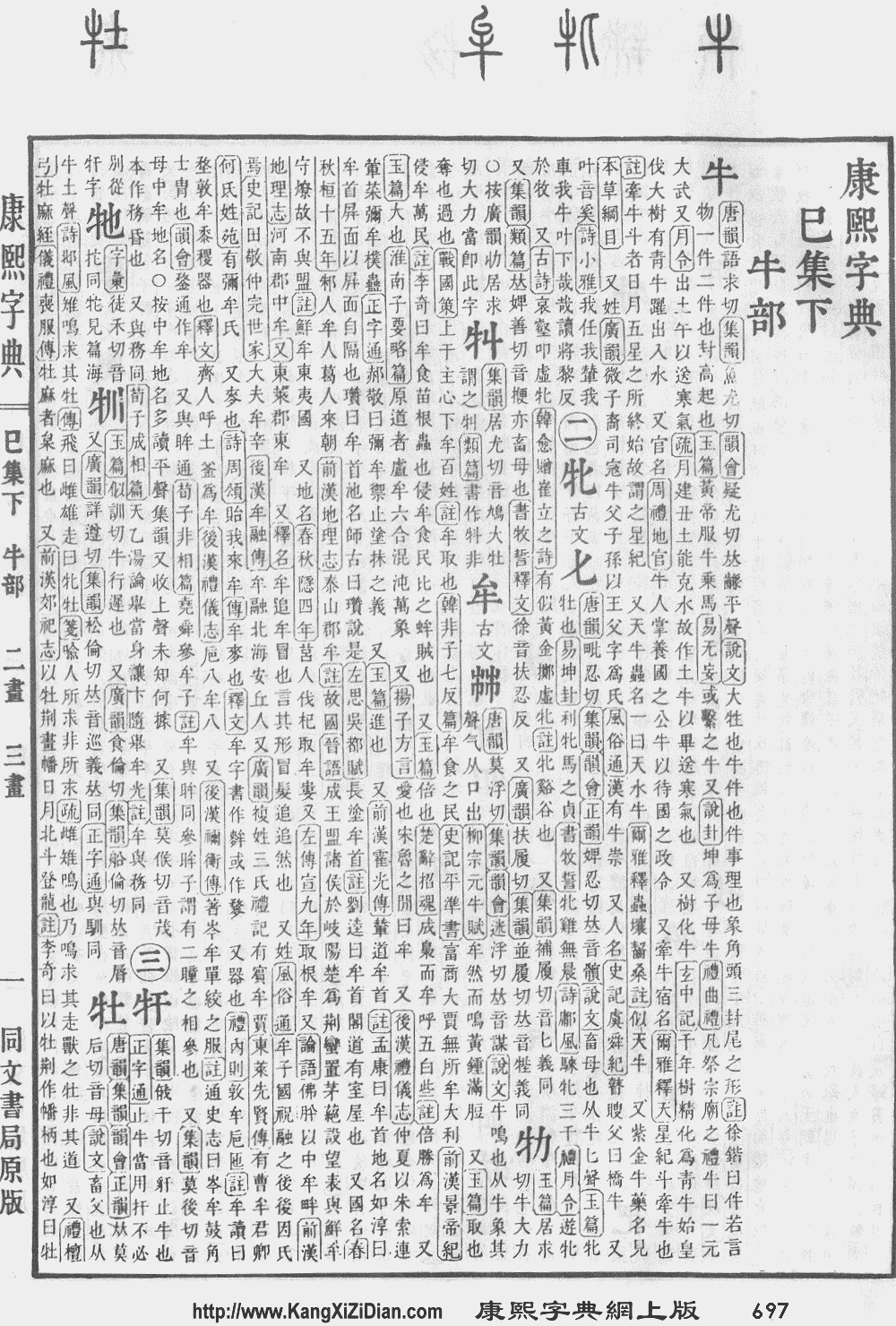
- KangXi: page 697, character 4
- Dai Kanwa Jiten: character 19926
- Dae Jaweon: page 1109, character 2
- Hanyu Da Zidian: volume 3, page 1800, character 6
- Unihan data for U+725E
Chinese
| simp. and trad. |
牞 | |
|---|---|---|
Etymology 1
Pronunciation
- Mandarin
- (Standard Chinese)+
- Pinyin:
- Zhuyin: ㄐㄧㄡ
- Wade-Giles: chiu1
- Gwoyeu Romatzyh: jiou
- IPA (key): /t͡ɕi̯oʊ̯⁵⁵/
- (Standard Chinese)+
- Cantonese
- (Standard Cantonese, Guangzhou)+
- Jyutping: gau1, kau1
- Yale: gāu, kāu
- Cantonese Pinyin: gau1, kau1
- Guangdong Romanization: geo1, keo1
- IPA (key): /kɐu̯⁵⁵/, /kʰɐu̯⁵⁵/
- (Standard Cantonese, Guangzhou)+
Definitions
牞
- vigorous bull
Etymology 2
Pronunciation
- Mandarin
- (Standard Chinese)+
- Pinyin:
- Zhuyin: ㄌㄜˋ
- Wade-Giles: lê4
- Gwoyeu Romatzyh: leh
- IPA (key): /lɤ⁵¹/
- (Standard Chinese)+
Definitions
牞
- name of an ancient state
Etymology 3
| For pronunciation and definitions of 牞 – see 犁 (“plough”). (This character, 牞, is the second-round simplified form of 犁.) |
Notes:
|
Japanese
Kanji
牞
- This term needs a translation to English. Please help out and add a translation, then remove the text
{{rfdef}}.
Readings
This article is issued from
Wiktionary.
The text is licensed under Creative Commons - Attribution - Sharealike.
Additional terms may apply for the media files.