桒
See also: 桑
| ||||||||
Translingual
Han character
桒 (radical 75 木+6, 10 strokes, cangjie input 十廿木 (JTD), composition ⿱卉木(GJ) or ⿱卉朩(T))
References
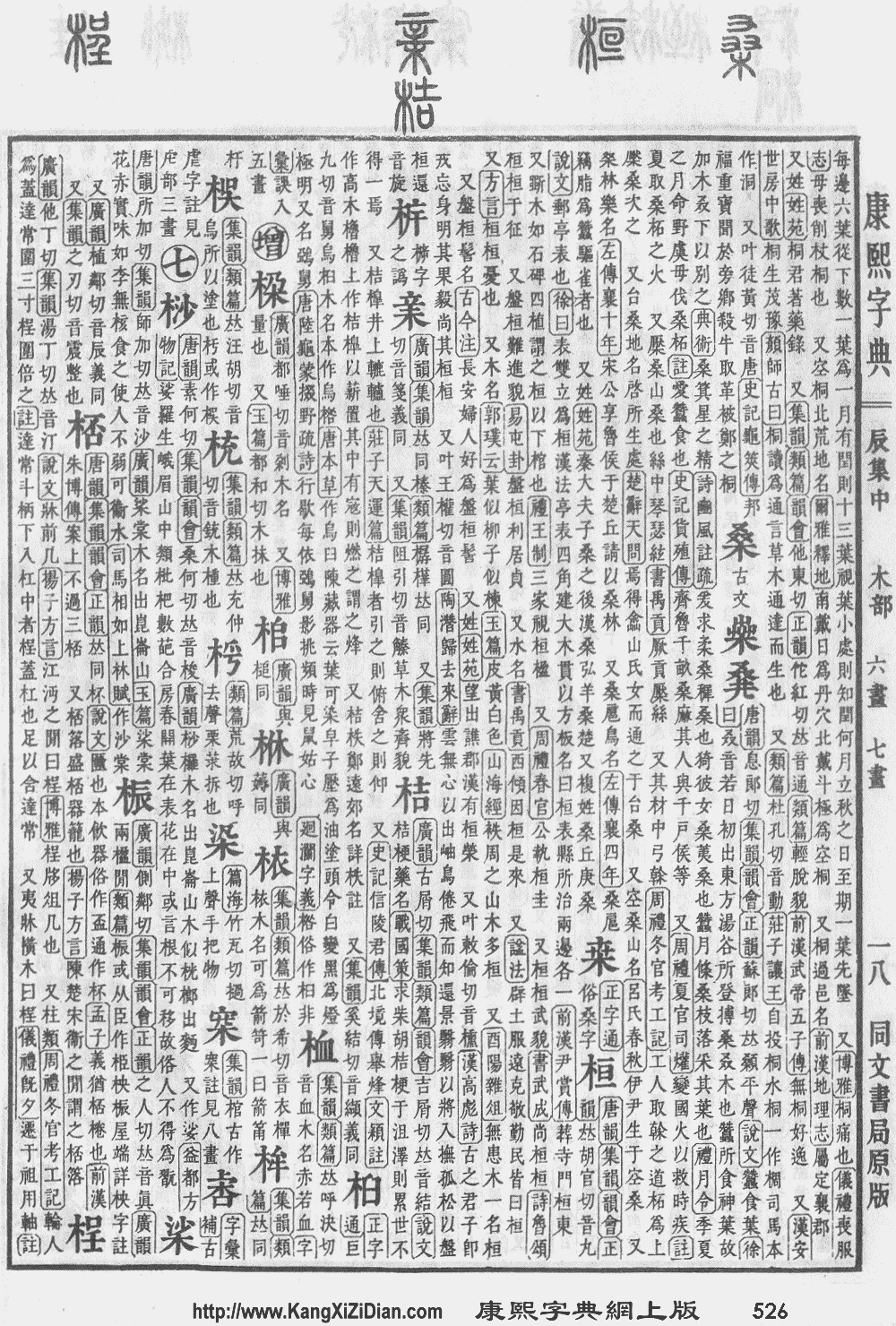
- KangXi: page 526, character 4
- Dai Kanwa Jiten: character 14685
- Hanyu Da Zidian: volume 2, page 1176, character 12
- Unihan data for U+6852
Chinese
Glyph origin
| Characters in the same phonetic series (桑) (Zhengzhang, 2003) | |
|---|---|
| Old Chinese | |
| 桒 | *sŋaːŋ |
| 桑 | *sŋaːŋ |
| 磉 | *sŋaːŋʔ |
| 顙 | *sŋaːŋʔ |
| 嗓 | *sŋaːŋʔ |
| 搡 | *sŋaːŋʔ |
Definitions
| For pronunciation and definitions of 桒 – see 桑 (“mulberry tree; etc.”). (This character, 桒, is a variant form of 桑.) |
Japanese
Kanji
桒
Readings
- Goon: そう (sō)←さう (sau, historical)
- Kan’on: そう (sō)←さう (sau, historical)
- Kun: くわ (kuwa, 桒)←くは (kufa, historical)
Noun
桒 (hiragana くわ, katakana クワ, rōmaji kuwa, historical hiragana くは, historical katakana クハ)
- Alternative form of 桑 (“mulberry tree”)
This article is issued from
Wiktionary.
The text is licensed under Creative Commons - Attribution - Sharealike.
Additional terms may apply for the media files.