抜
See also: 拔
| ||||||||
Translingual
| Japanese | 抜 |
|---|---|
| Simplified | 拔 |
| Traditional | 拔 |
Etymology
Japanese shinjitai Simplified from 拔 (犮 → 友).
Phono-semantic compound (形聲) : semantic 扌 (“hand”) + phonetic 友 (OC *ɢʷɯʔ) – a hand pulls.
Han character
抜 (radical 64 手+4, 7 strokes, cangjie input 手大水 (QKE) or X手大水 (XQKE), composition ⿰扌友)
References
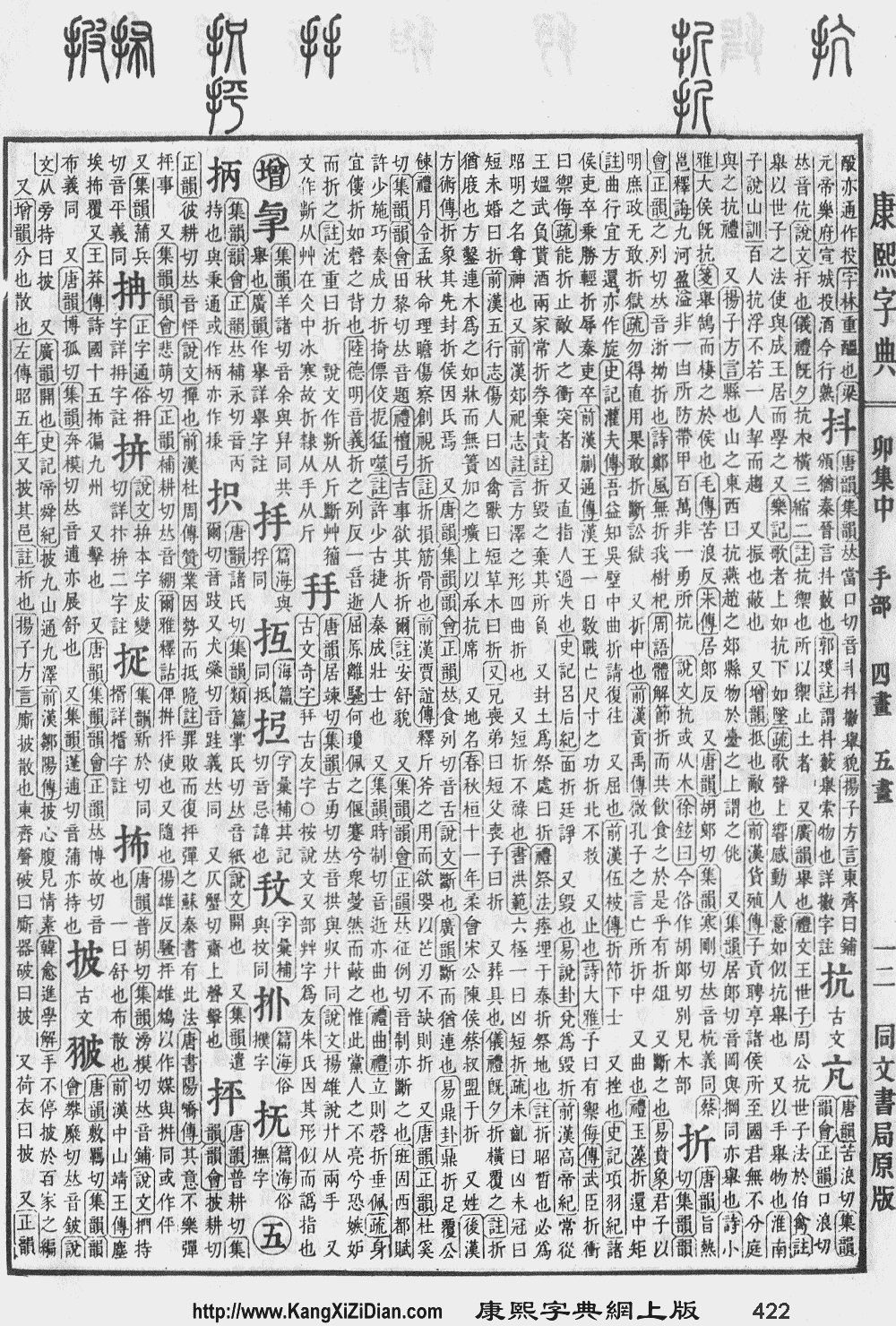
- KangXi: not present, would follow page 422, character 12
- Dai Kanwa Jiten: character 11901
- Dae Jaweon: page 770, character 8
- Hanyu Da Zidian: not present, would follow volume 3, page 1834, character 9
- Unihan data for U+629C
Japanese
| 抜 | |
| 拔 |
Kanji
抜
(common “Jōyō” kanji, shinjitai kanji, kyūjitai form 拔)
- This term needs a translation to English. Please help out and add a translation, then remove the text
{{rfdef}}.
Readings
Compounds
- 縄抜け (nawanuke)
Derived terms
- 抜ける (nukeru)
Korean
Hanja
抜 • (bal, pae) (hangeul 발, 패, revised bal, pae, McCune–Reischauer pal, p'ae, Yale pal, phay)
- This term needs a translation to English. Please help out and add a translation, then remove the text
{{rfdef}}.
Mandarin
Hanzi
抜 (Pinyin bá (ba2), Wade-Giles pa2)
- This term needs a translation to English. Please help out and add a translation, then remove the text
{{rfdef}}.
This article is issued from
Wiktionary.
The text is licensed under Creative Commons - Attribution - Sharealike.
Additional terms may apply for the media files.