扁桃
Chinese
flat; tablet; inscription; small boat |
peach | ||
|---|---|---|---|
| simp. and trad. (扁桃) |
扁 | 桃 | |
| alt. forms | 偏桃 匾桃 | ||
Etymology
A Central Asian import during the Medieval period. Perhaps a phono-semantic matching of Persian بادام (bâdâm, “almond”) (as per Cihai), semantically construed as the “flat peach”.
Pronunciation
Noun
扁桃
Synonyms
Derived terms
Japanese
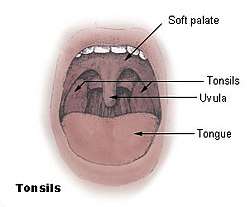
扁桃 (hentō): the tonsils.
| Kanji in this term | |
|---|---|
| 扁 | 桃 |
| へん Hyōgaiji |
とう Grade: S |
| on’yomi | |
Etymology
/pentau/ → /fentau/ → /hentau/ → /hentɔː/ → /hentoː/
From Middle Chinese compound 扁桃 (penX daw, literally “flat, thin + peach”), from the way the almond fruit resembles a flat, thin peach.
The modern sense of tonsil came about by contraction from the full term 扁桃腺 (hentōsen, literally “almond gland”).
Pronunciation
Noun
扁桃 (hiragana へんとう, katakana ヘントウ, rōmaji hentō, historical hiragana へんたう)
Synonyms
Derived terms
Derived terms
- 苦扁桃 (kuhentō): bitter almond
- 苦扁桃油 (kuhentōyu): bitter almond oil
- 苦扁桃水 (kuhentōsui): bitter almond oil dissolved in water
- 扁桃炎 (hentōen): tonsillitis
- 扁桃核 (hentōkaku): amygdala
- 扁桃腺 (hentōsen): tonsil
- 扁桃腺炎 (hentōsen'en): tonsillitis
- 扁桃腺切除 (hentōsen setsujo): tonsillectomy
- 扁桃肥大 (hentō hidai): enlarged tonsils, tonsillar hypertrophy
- 扁桃体 (hentōtai): amygdala
- 扁桃油 (hentōyu): almond oil
References
- 1988, 国語大辞典(新装版) (Kokugo Dai Jiten, Revised Edition) (in Japanese), Tōkyō: Shogakukan
This article is issued from
Wiktionary.
The text is licensed under Creative Commons - Attribution - Sharealike.
Additional terms may apply for the media files.