戾
See also: 戻 and 𝌋
| ||||||||
Translingual
Han character
戾 (radical 63, 戶+4, 8 strokes, cangjie input 竹尸戈大 (HSIK) or 戈尸戈大 (ISIK), four-corner 30234, composition ⿸戶犬 or ⿸户犬)
Derived characters
References
- KangXi: page 415, character 11
- Dai Kanwa Jiten: character 11712
- Dae Jaweon: page 759, character 15
- Hanyu Da Zidian: volume 3, page 2258, character 6
- Unihan data for U+623E
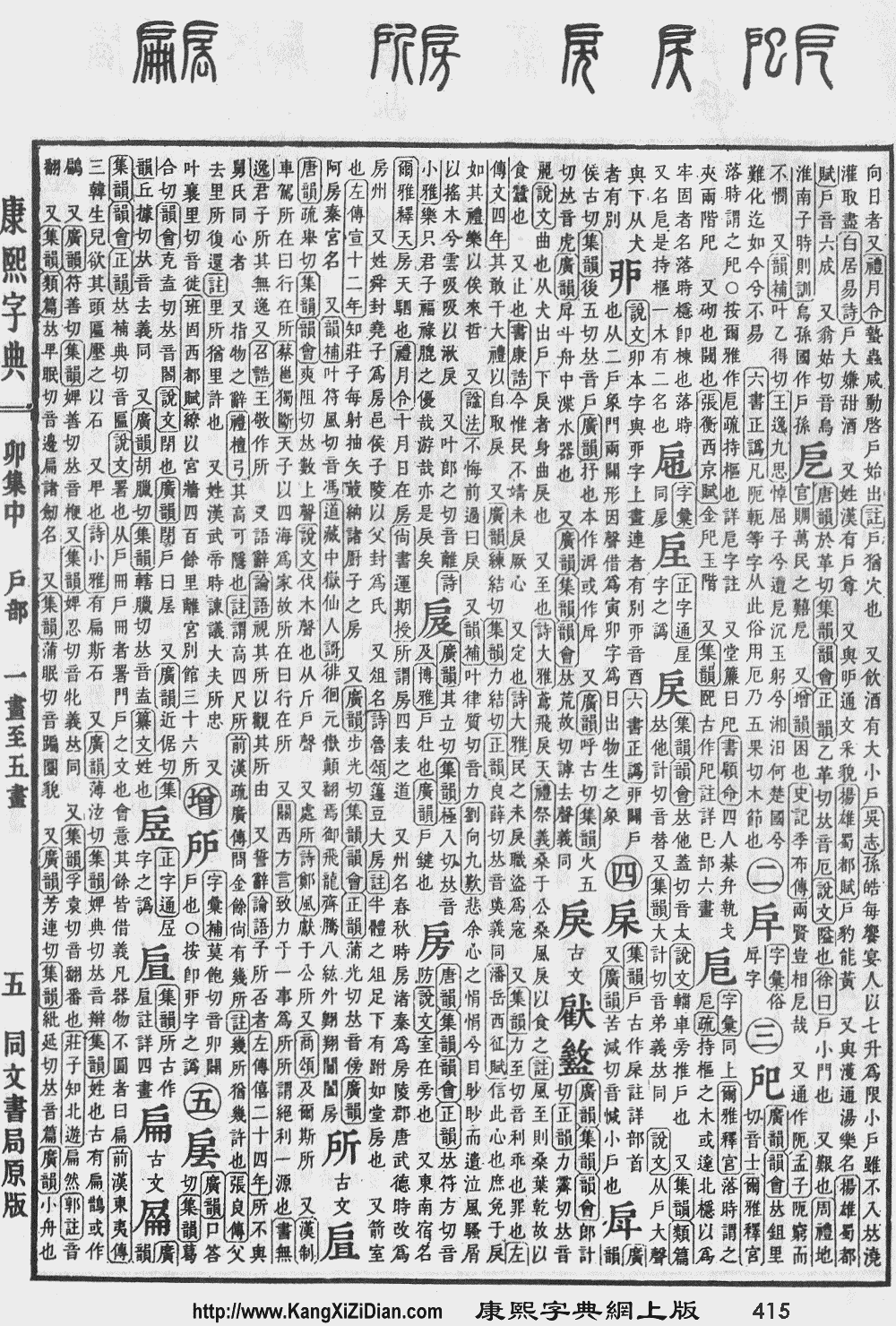
Chinese
| simp. and trad. |
戾 | |
|---|---|---|
Glyph origin
| Characters in the same phonetic series (戾) (Zhengzhang, 2003) | |
|---|---|
| Old Chinese | |
| 錑 | *ruːds |
| 戻 | *tʰɯːds |
| 戾 | *rɯːds, *rɯːd |
| 綟 | *rɯːds, *rɯːd |
| 唳 | *rɯːds, *rɯːd |
| 蜧 | *rɯːds |
| 捩 | *rɯːds, *rɯːd |
| 悷 | *rɯːds |
| 淚 | *ruds |
Pronunciation
Definitions
戾
- perverse, recalcitrant, rebellious
- 6th tetragram of the Taixuanjing; "contrariety"
Compounds
References
Japanese
| 戻 | |
| 戾 |
Kanji
戾
(uncommon “Hyōgai” kanji, kyūjitai kanji, shinjitai form 戻)
- This term needs a translation to English. Please help out and add a translation, then remove the text
{{rfdef}}.
Readings
Korean
Hanja
戾 • (ryeo>yeo, ryeol>yeol) (hangeul 려>여, 렬>열, revised ryeo>yeo, ryeol>yeol, McCune–Reischauer ryŏ>yŏ, ryŏl>yŏl, Yale lye>ye, lyel>yel)
- This term needs a translation to English. Please help out and add a translation, then remove the text
{{rfdef}}.
Vietnamese
Han character
戾 (lệ)
liệt (xoay lại, turn back)
- This term needs a translation to English. Please help out and add a translation, then remove the text
{{rfdef}}.
This article is issued from
Wiktionary.
The text is licensed under Creative Commons - Attribution - Sharealike.
Additional terms may apply for the media files.