廃
| ||||||||
Translingual
| Traditional | 廢 |
|---|---|
| Shinjitai | 廃 |
| Simplified | 废 |
Etymology
Han character
廃 (radical 53, 广+9, 12 strokes, cangjie input 戈弓人心 (INOP), four-corner 00215, composition ⿸广発)
References
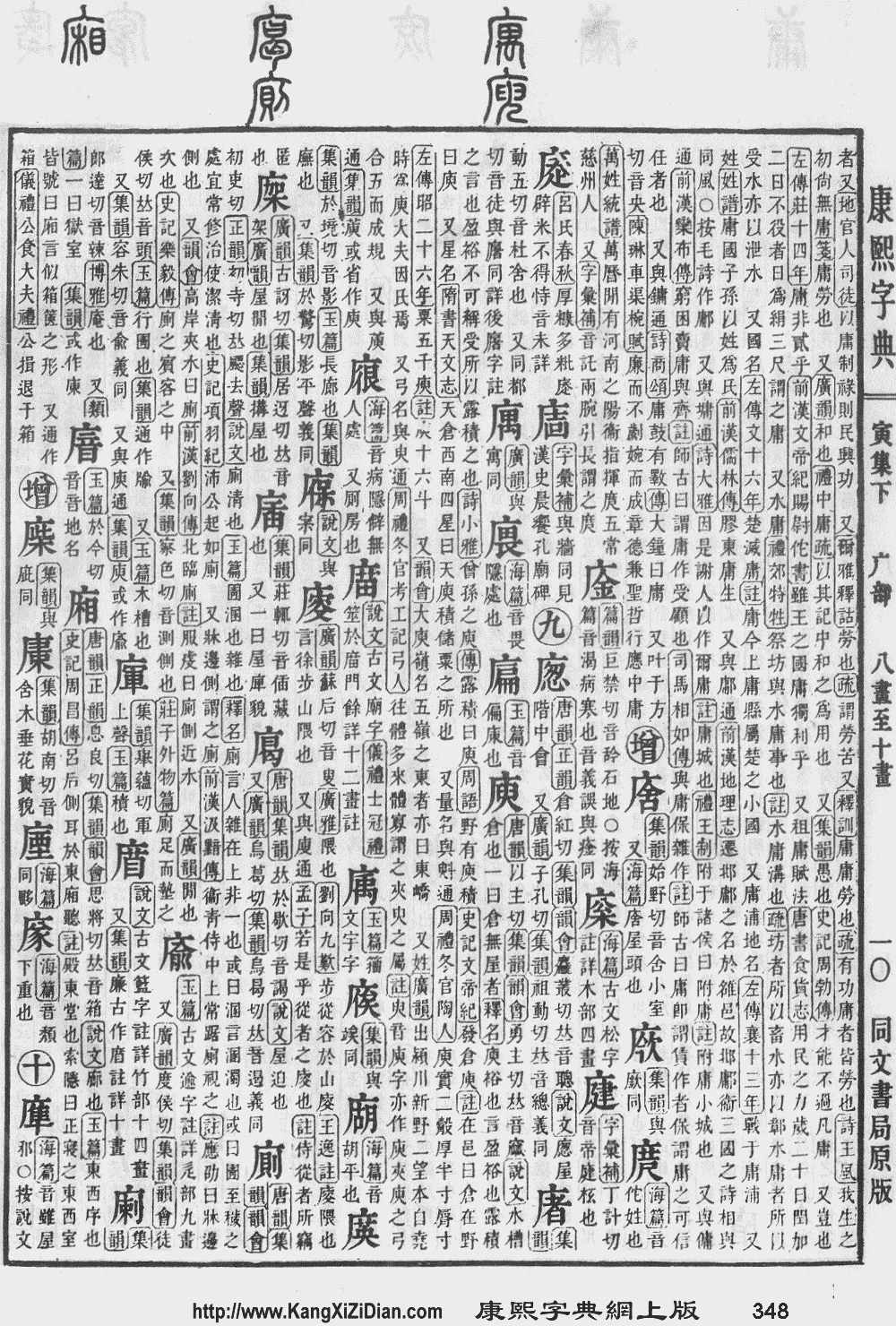
- KangXi: not present, would follow page 348, character 36
- Dai Kanwa Jiten: character 9425
- Dae Jaweon: page 659, character 24
- Hanyu Da Zidian: not present, would follow volume 2, page 894, character 12
- Unihan data for U+5EC3
Chinese
| For pronunciation and definitions of 廃 – see 廢 (“to collapse; to abandon; to abrogate; to abolish; etc.”). (This character, 廃, is the former (1969–1976) Singaporean simplified and variant form of 廢.) |
Notes:
|
Japanese
| 廃 | |
| 廢 |
Kanji
廃
(common “Jōyō” kanji, shinjitai kanji, kyūjitai form 廢)
Readings
Etymology
| Kanji in this term |
|---|
| 廃 |
| はい Grade: S |
| on’yomi |
From Sinitic. Shortening of 廃人 (haijin), a back-formation from ネトゲ廃人 (netoge haijin, “slang: online games addict”).
Suffix
- (slang) addict
See also
- 厨 (chū)
This article is issued from
Wiktionary.
The text is licensed under Creative Commons - Attribution - Sharealike.
Additional terms may apply for the media files.