尢
| ||||||||
Translingual
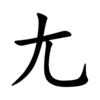
| Stroke order | |||
|---|---|---|---|
 | |||
Han character
尢 (radical 43 尢+0, 3 strokes, cangjie input 大山 (KU) or X大山 (XKU), four-corner 40010)
- Kangxi radical #43, ⼪.
Descendants
Related characters
References
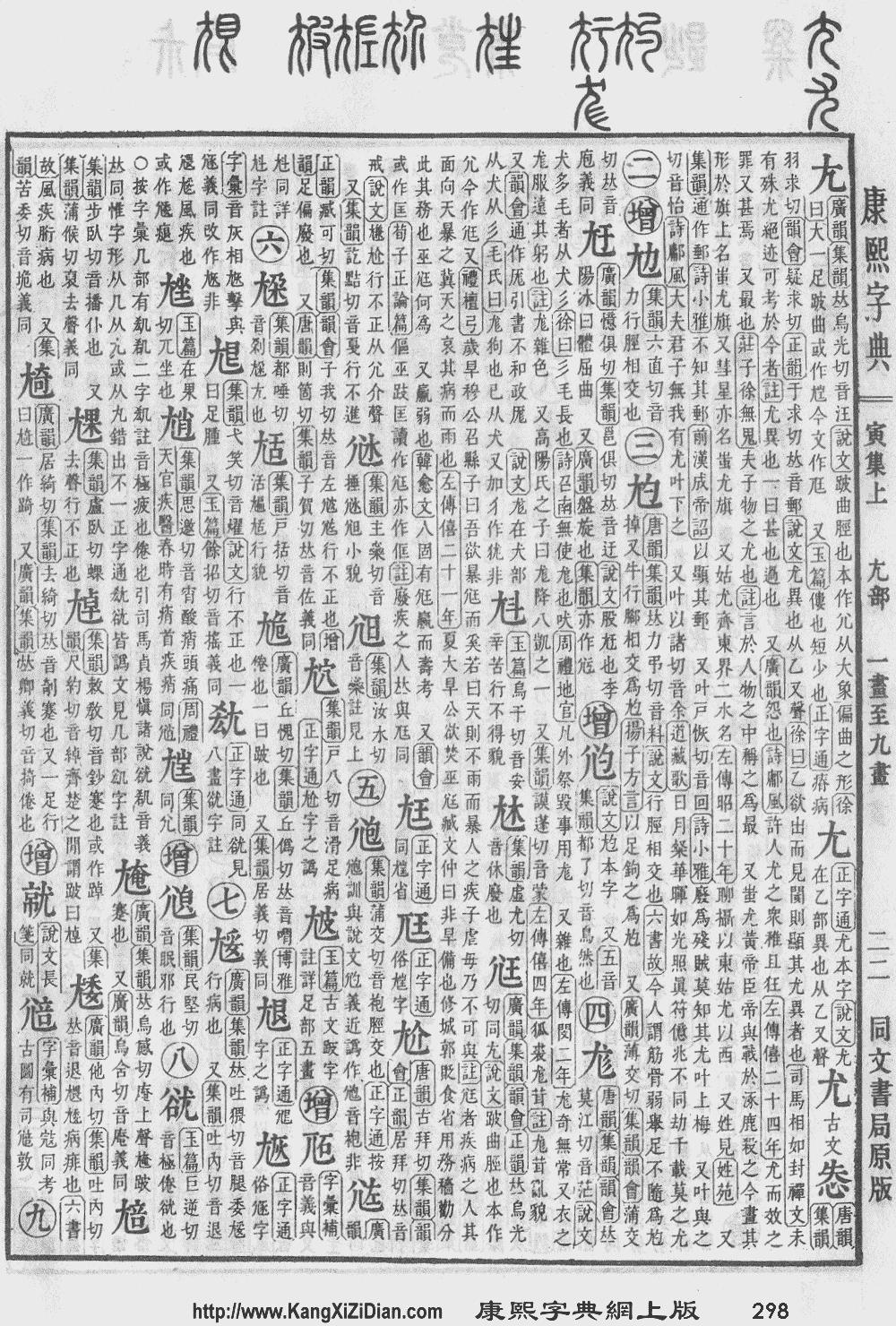
- KangXi: page 298, character 2
- Dai Kanwa Jiten: character 7539
- Dae Jaweon: page 593, character 1
- Hanyu Da Zidian: volume 1, page 551, character 10
- Unihan data for U+5C22
Chinese
Glyph origin
| Historical forms of the character 尢 | |||
|---|---|---|---|
| Shang | Western Zhou | Shuowen Jiezi (compiled in Han) | |
| Oracle bone script | Bronze inscriptions | Ancient script | Small seal script |
 |
 |
 |
 |
Ideogram (指事) , a man with bent legs (jumping or collapsing). Compare with 大, which derives from a man with straight legs, and in present form has slightly different strokes.
Etymology 1
| simp. and trad. |
尢 | |
|---|---|---|
| alt. forms | 兀 𡯁 尣 𡯂 | |
Pronunciation
Definitions
尢
See also
- 尪 (wāng)
Etymology 2
| For pronunciation and definitions of 尢 – see 尤 (“especially, particularly”). (This character, 尢, is a variant form of 尤.) |
Japanese
Kanji
尢
- This term needs a translation to English. Please help out and add a translation, then remove the text
{{rfdef}}.
Readings
Vietnamese
Han character
尢 (uông, vưu)
- This term needs a translation to English. Please help out and add a translation, then remove the text
{{rfdef}}.
This article is issued from
Wiktionary.
The text is licensed under Creative Commons - Attribution - Sharealike.
Additional terms may apply for the media files.