封印
Chinese
to confer; to grant; to seal; (a measure word) |
stamp; seal; mark; print; India (abbrev.) | ||
|---|---|---|---|
| simp. and trad. (封印) |
封 | 印 | |
Pronunciation
Noun
封印
- seal (stamp)
Japanese

| Kanji in this term | |
|---|---|
| 封 | 印 |
| ふう Grade: S |
いん Grade: 4 |
| on’yomi | |
Etymology
From Middle Chinese compound 封印 (pjowng ʔjinH, literally “to enclose, to seal + stamp, seal”). Compare modern Mandarin 封印 (fēngyìn).
Pronunciation
Noun
封印 (hiragana ふういん, rōmaji fūin)
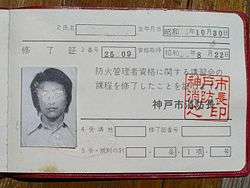
- a seal, such as a wax impression or stamped pattern, made across the closure of an envelope or on a document for purposes of authentication
- 1999 May 27, “封印の鎖 [Sealing Chain]”, in Vol.3 (in Japanese), Konami:
- 相手をギリギリと締め上げて、封印を施す力を持つ。
- Aite o girigiri to shimeagete, fūin o hodokosu chikara o motsu.
- It tightly binds the opponent, drain their power and pour it into the seal.
- 相手をギリギリと締め上げて、封印を施す力を持つ。
-
Synonyms
Derived terms
Derived terms
- 封印切 (Fūinkiri): common name of the middle volume of the 浄瑠璃 (jōruri, “narration for traditional Japanese puppet theater”) play, 冥途の飛脚 (Meido no Hikyaku, “The Courier of Hell”): see Wikipedia:The Courier for Hell
- 封印付き (fūin tsuki): something with a seal affixed; something with a metaphorical seal of approval
- 封印破棄罪 (fūin hakizai): the crime of breaking or otherwise invalidating an official seal
- 封印木 (fūin boku): Sigillaria, an extinct genus of tree-like plant: see Wikipedia:Sigillaria
Verb
封印する (hiragana ふういんする, rōmaji fūin suru)
Conjugation
Conjugation of "封印する" (See Appendix:Japanese verbs.)
| Stem forms | ||||
|---|---|---|---|---|
| Imperfective (未然形) | 封印し | ふういんし | fūin shi | |
| Continuative (連用形) | 封印し | ふういんし | fūin shi | |
| Terminal (終止形) | 封印する | ふういんする | fūin suru | |
| Attributive (連体形) | 封印する | ふういんする | fūin suru | |
| Hypothetical (仮定形) | 封印すれ | ふういんすれ | fūin sure | |
| Imperative (命令形) | 封印せよ¹ 封印しろ² |
ふういんせよ¹ ふういんしろ² |
fūin seyo¹ fūin shiro² | |
| Key constructions | ||||
| Passive | 封印される | ふういんされる | fūin sareru | |
| Causative | 封印させる 封印さす |
ふういんさせる ふういんさす |
fūin saseru fūin sasu | |
| Potential | 封印できる | ふういんできる | fūin dekiru | |
| Volitional | 封印しよう | ふういんしよう | fūin shiyō | |
| Negative | 封印しない | ふういんしない | fūin shinai | |
| Negative continuative | 封印せず | ふういんせず | fūin sezu | |
| Formal | 封印します | ふういんします | fūin shimasu | |
| Perfective | 封印した | ふういんした | fūin shita | |
| Conjunctive | 封印して | ふういんして | fūin shite | |
| Hypothetical conditional | 封印すれば | ふういんすれば | fūin sureba | |
| ¹ Written imperative ² Spoken imperative | ||||
References
This article is issued from
Wiktionary.
The text is licensed under Creative Commons - Attribution - Sharealike.
Additional terms may apply for the media files.