寗
| ||||||||
Translingual
Han character
寗 (radical 40, 宀+10, 13 strokes, cangjie input 十心竹月 (JPHB), composition ⿱宓冉)
References
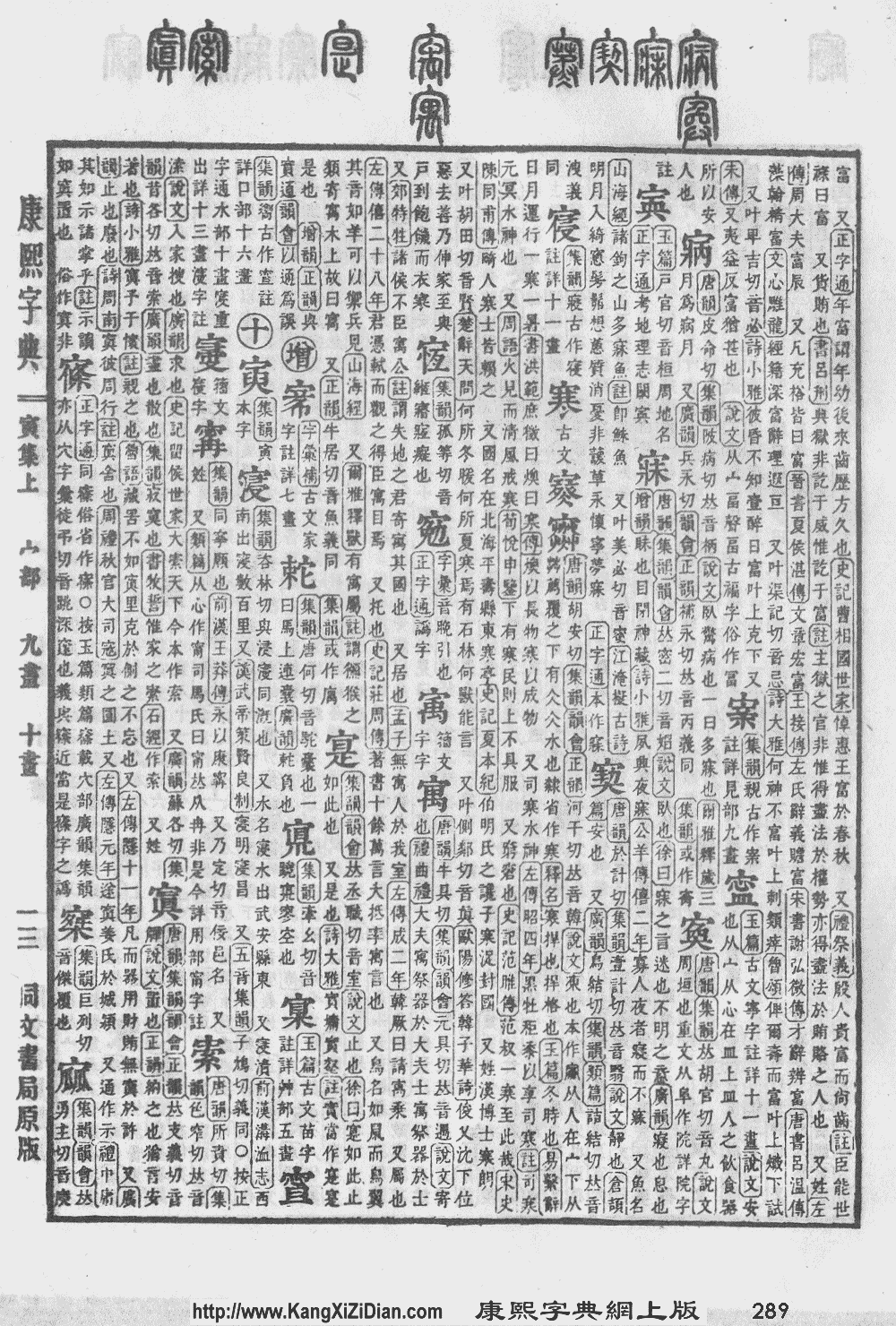
- KangXi: page 289, character 25
- Dai Kanwa Jiten: character 7255
- Dae Jaweon: page 573, character 16
- Hanyu Da Zidian: volume 2, page 946, character 10
- Unihan data for U+5BD7
Chinese
Glyph origin
| Characters in the same phonetic series (寧) (Zhengzhang, 2003) | |
|---|---|
| Old Chinese | |
| 濘 | *neːs, *neːŋʔ, *neːŋs |
| 獰 | *rnaːŋ |
| 檸 | *rnaːŋʔ |
| 儜 | *rneːŋ |
| 薴 | *rneːŋ |
| 鬡 | *rneːŋ |
| 鑏 | *rneːŋ |
| 嬣 | *rneːŋ |
| 寍 | *neːŋ |
| 寗 | *neːŋs |
| 甯 | *neːŋs |
| 寧 | *neːŋ |
| 鸋 | *neːŋ, *neːŋs |
| 嚀 | *neːŋ |
| 聹 | *neːŋ, *neːŋʔ |
| For pronunciation and definitions of 寗 – see 甯 (“peaceful”). (This character, 寗, is a variant form of 甯.) |
Japanese
Kanji
寗
- This term needs a translation to English. Please help out and add a translation, then remove the text
{{rfdef}}.
Readings
Korean
Hanja
寗 • (nyeong) (hangeul 녕, revised nyeong, McCune–Reischauer nyŏng)
- This term needs a translation to English. Please help out and add a translation, then remove the text
{{rfdef}}.
This article is issued from
Wiktionary.
The text is licensed under Creative Commons - Attribution - Sharealike.
Additional terms may apply for the media files.