媮
See also: 婾
| ||||||||
Translingual
Han character
媮 (radical 38 女+9, 12 strokes, cangjie input 女人一弓 (VOMN), four-corner 48421, composition ⿰女俞)
References
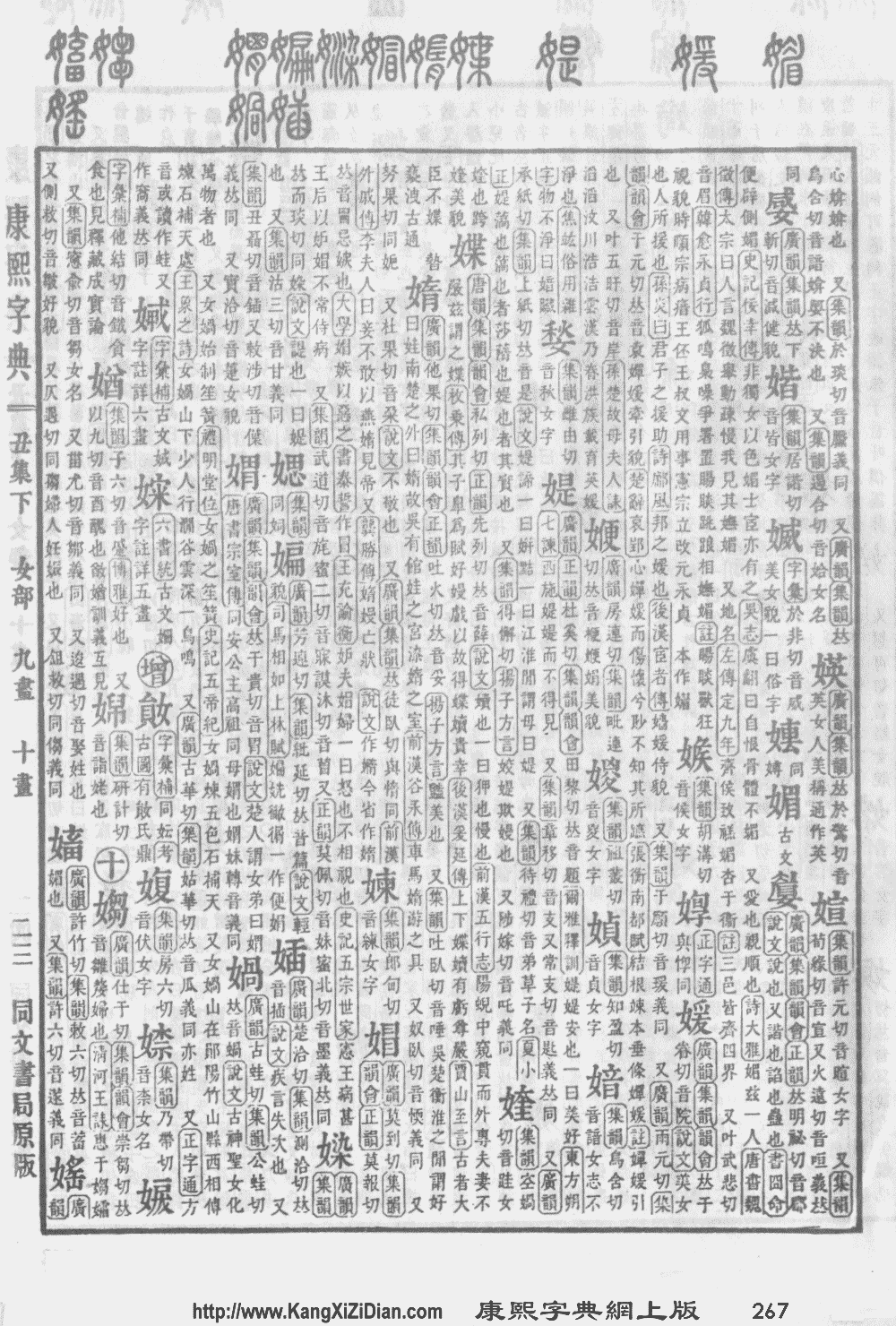
- KangXi: not present, would follow page 267, character 36
- Dae Jaweon: page 533, character 15
- Hanyu Da Zidian: volume 2, page 1067, character 10
- Unihan data for U+5AAE
Chinese
Etymology 1
| For pronunciation and definitions of 媮 – see 偷 (“to steal; to snatch; stealthily; secretly; covertly; etc.”). (This character, 媮, is a variant form of 偷.) |
Etymology 2
| For pronunciation and definitions of 媮 – see 愉 (“happy; pleased; delightful”). (This character, 媮, is a variant form of 愉.) |
Japanese
Kanji
媮
- This term needs a translation to English. Please help out and add a translation, then remove the text
{{rfdef}}.
Readings
- On (unclassified): とう (tō), つ (tsu), ゆ (yu)
- Kun: わるがしこい (warugashikoi), ぬすむ (nusumu), ごまかす (gomakasu)
Vietnamese
Han character
- This term needs a translation to English. Please help out and add a translation, then remove the text
{{rfdef}}.
References
This article is issued from
Wiktionary.
The text is licensed under Creative Commons - Attribution - Sharealike.
Additional terms may apply for the media files.