兎
See also: 兔
| ||||||||
Translingual
Han character
兎 (radical 10 儿+5, 7 strokes, cangjie input 竹中日戈 (HLAI))
Derived characters
- 𮡺, 𡨘, 𫟏
Related characters
- 兔 (Orthodox form)
References
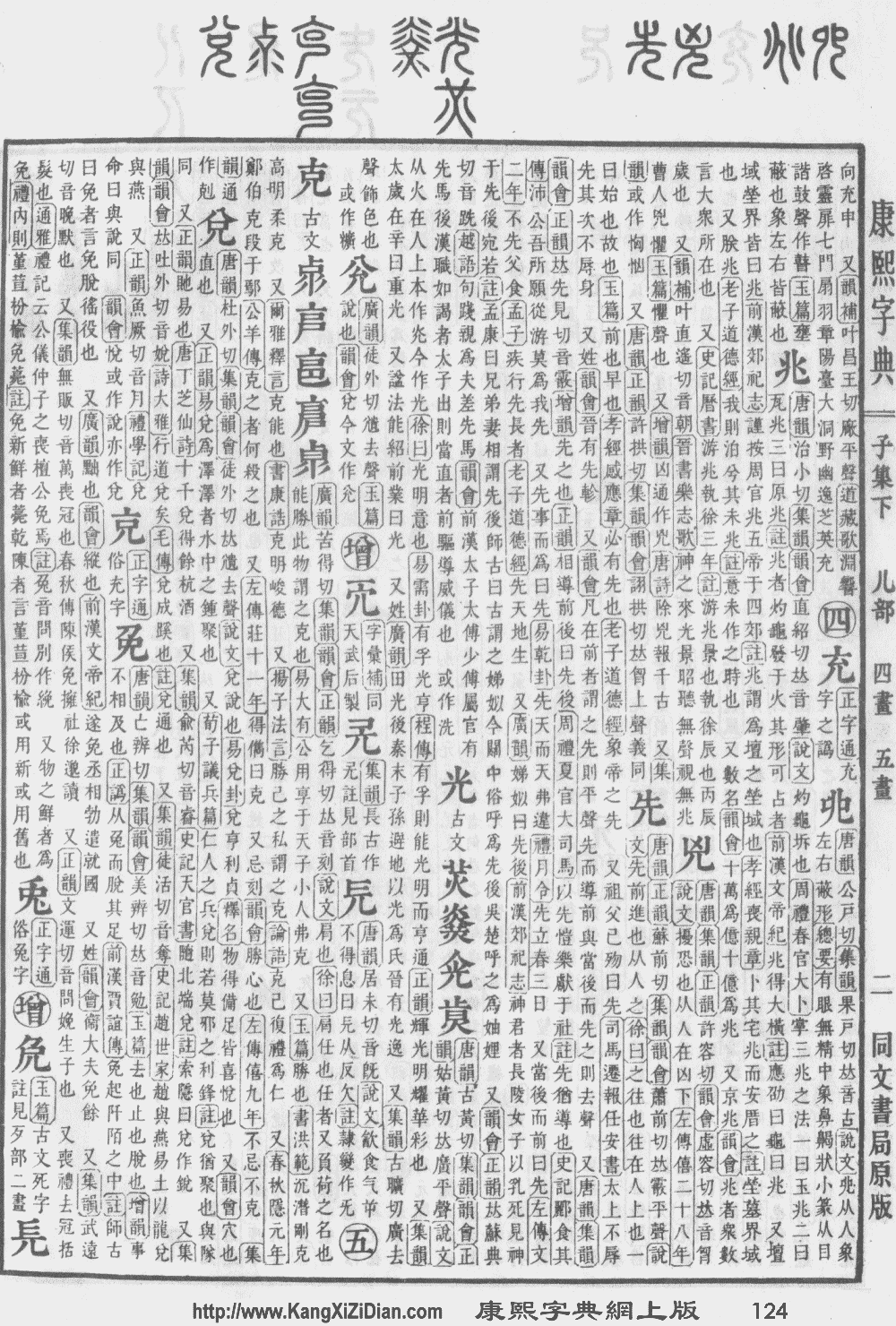
- KangXi: page 124, character 24
- Dai Kanwa Jiten: character 1359
- Dae Jaweon: page 264, character 4
- Hanyu Da Zidian: volume 1, page 270, character 5
- Unihan data for U+514E
Usage notes
The Kangxi dictionary lists 兎 as an unorthodox character (俗字) of 兔. However, it is the preferred form used in modern Japanese.
Chinese
| For pronunciation and definitions of 兎 – see 兔 (“leporid; rabbit or hare; moon; etc.”). (This character, 兎, is a variant form of 兔.) |
Japanese
Kanji
兎
(“Jinmeiyō” kanji used for names)
Readings
Compounds
- 雄兎 (osuusagi): a male rabbit
- 雌兎 (mesuusagi): a female rabbit
- 子兎 (kousagi): a baby rabbit or hare; a kitten
- 小兎 (kousagi): a small rabbit or hare
- 大兎 (ōusagi): a large rabbit or hare
- 野兎 (nousagi): a wild rabbit or hare
- 家兎 (ieusagi): a domestic rabbit or hare; a pet rabbit
- 守株待兎 (shushutaito): (1) watch a stock and wait a rabbit; (2) trust a windfall
Etymology
| Kanji in this term |
|---|
| 兎 |
| うさぎ Jinmeiyō |
| kun’yomi |
Pronunciation
Noun
兎 (counter 羽, hiragana うさぎ, katakana ウサギ, rōmaji usagi)
Related terms
- 卯 (u)
Usage notes
- As with many terms that name organisms, this term is often spelled in katakana, especially in biological contexts, as ウサギ.
Korean
Hanja
兎 • (to) (hangeul 토, revised to, McCune–Reischauer t'o)
Vietnamese
Han character
兎 (thỏ, thố)
- This term needs a translation to English. Please help out and add a translation, then remove the text
{{rfdef}}.
This article is issued from
Wiktionary.
The text is licensed under Creative Commons - Attribution - Sharealike.
Additional terms may apply for the media files.