仏
| ||||||||
Translingual
Han character
仏 (radical 9, 人+2, 4 strokes, cangjie input 人戈 (OI) or X人戈 (XOI), four-corner 22230, composition ⿰亻厶)
References
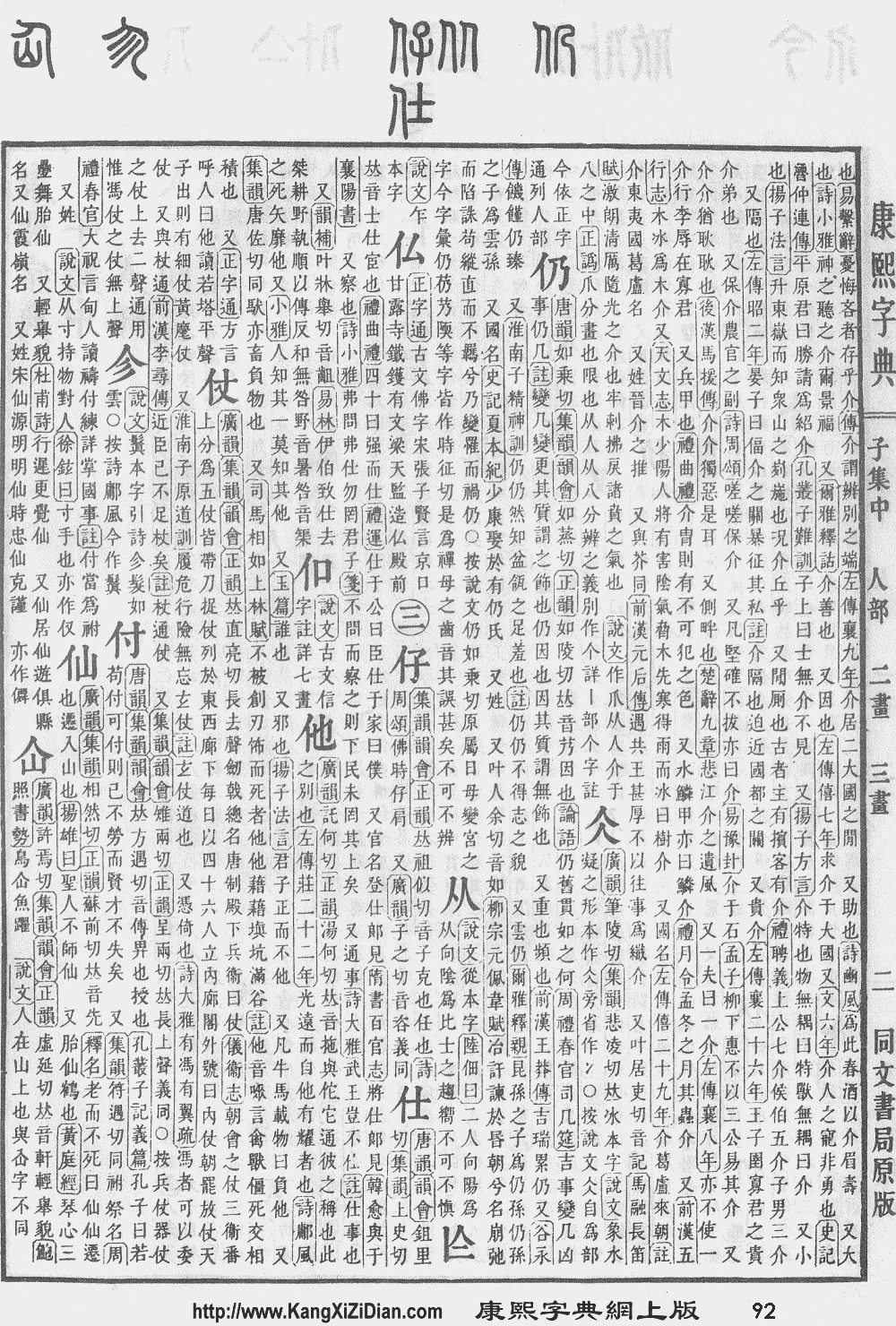
- KangXi: page 92, character 5
- Dai Kanwa Jiten: character 364
- Dae Jaweon: page 195, character 3
- Hanyu Da Zidian: volume 1, page 110, character 5
- Unihan data for U+4ECF
Chinese
Glyph origin
Used since Northern and Southern dynasties. To avoid using the character 佛, 某 (mǒu, “someone”) is used instead; the character is ideogrammic compound (會意) : 亻 + 厶, where 厶 is a variant form of 某.
Etymology 1
| For pronunciation and definitions of 仏 – see 佛 (“Buddha; statue of Buddha; etc.”). (This character, 仏, is an ancient form of 佛.) |
Etymology 2
| For pronunciation and definitions of 仏 – see 似 (“like; resembling; etc.”). (This character, 仏, is a variant form of 似.) |
Japanese
| 仏 | |
| 佛 |
Kanji
(grade 5 “Kyōiku” kanji, shinjitai kanji, kyūjitai form 佛)
Readings
Compounds
- 仏教 (bukkyō): Buddhism
- 仏像 (butsuzō): Buddhist image
- 仏壇 (butsudan): household Buddhist altar
- 仏陀 (budda): Buddha
- 仏様 (hotokesama): Buddha, deceased person
- 仏語 (futsugo): French language
- 仏文 (futsubun): French literature
- 仏印 (futsuin): French Indochina
- 仏文学 (futsubungaku): French literature
- 仏英辞典 (futsuei jiten): French-English dictionary
- 石仏 (sekibutsu): stone Buddhist image
- 大仏 (daibutsu): large statue of Buddha
- 念仏 (nenbutsu): Buddhist prayer
- 神仏 (shinbutsu): Shinto gods and Buddha
- 日仏 (nichifutsu): Japan and France
- 仏典 (butten): Buddhist scriptures, sutras
- 廃仏毀釈 (haibutsu kishaku): anti-Buddhist movement at the beginning of the Meiji era
Etymology 1
| Kanji in this term |
|---|
| 仏 |
| ふつ Grade: 5 |
| on’yomi |
Abbreviation of ateji term 仏蘭西 (Furansu, “France”).
Pronunciation
Proper noun
仏 (shinjitai kanji, kyūjitai kanji 佛, hiragana ふつ, rōmaji Futsu)
Synonyms
Etymology 2
| Kanji in this term |
|---|
| 仏 |
| ぶつ Grade: 5 |
| on’yomi |
From Middle Chinese 佛陀 (bjut dhɑ, “Buddha”), itself from Sanskrit बुद्ध (buddha).
Pronunciation
Noun
仏 (shinjitai kanji, kyūjitai kanji 佛, hiragana ぶつ, rōmaji butsu)
Synonyms
- 仏教 (bukkyō)
Proper noun
仏 (shinjitai kanji, kyūjitai kanji 佛, hiragana ぶつ, rōmaji Butsu)
Etymology 3
| Kanji in this term |
|---|
| 仏 |
| ほとけ Grade: 5 |
| kun’yomi |
Unclear. Theories of possible originː
- The hoto element might be from a Chinese dialect variation on Middle Chinese 佛陀 (bjut dhɑ),[1] or possibly just the 佛 (bjut) portion,[2] ultimately deriving from Sanskrit बुद्ध (buddha). The ke element might be the suffix 気 (ke, “spirit”).[1]
- An ancient borrowing from Korean 부텨 (pwuthye), the source of Modern Korean 부처 (Bucheo).
Pronunciation
Noun
仏 (shinjitai kanji, kyūjitai kanji 佛, hiragana ほとけ, rōmaji hotoke)
- A Buddha: an enlightened or awakened sentient being.
- A statue or image of any Buddha.
- The deceased, a departed soul.
- A term that a parent calls a child expressing parental affection: "my dear".
- c. 890: Taketori Monogatari[3] (page 7)
- 我子の佛、變化の人と申しながら、こゝら大さまで養ひ奉る志疎かならず。
- わ が こ の ほとけ、 へんげ の ひと と まうしながら、 ここら おほき さま で やしなひ たてまつる こころざし をろか ならず。
- Wa ga ko no hotoke, henge no hito to maushinagara, kokora ohoki sama de yashinahi tatematsuru kokorozashi woroka narazu.
- My dear child, when you are talking about someone who is a manifestation [of a supernatural entity], it would not be dumb to try to bring them up in this grand fashion.
- 我子の佛、變化の人と申しながら、こゝら大さまで養ひ奉る志疎かならず。
- c. 890: Taketori Monogatari[3] (page 61)
- あが仏、何事思ひたまふぞ。
- あ が ほとけ、 なにごと おもひたまふ ぞ。
- A ga hotoke, nanigoto omohitamafu zo.
- My dear, what on earth are you thinking about?
- あが仏、何事思ひたまふぞ。
- c. 890: Taketori Monogatari[3] (page 7)
Proper noun
仏 (shinjitai kanji, kyūjitai kanji 佛, hiragana ほとけ, rōmaji Hotoke)
- Sakyamuni Buddha, Nepalese spiritual and philosophical teacher and founder of Buddhism: Siddhartha Gautama.
- Any of the other Buddhas named in Buddhist scriptures.
References
- 1 2 3 4 5 2006, 大辞林 (Daijirin), Third Edition (in Japanese), Tōkyō: Sanseidō, →ISBN
- ↑ 1995, 大辞泉 (Daijisen) (in Japanese), Tōkyō: Shogakukan, →ISBN
- 1 2 Horiuchi, Hideaki; Ken Akiyama (1997) Taketori Monogatari, Ise Monogatari, Tōkyō: Iwanami Shoten, →ISBN