㓷
| ||||||||
Translingual
Han character
㓷 (radical 18 刀+10, 12 strokes, cangjie input 竹木中弓 (HDLN), composition ⿰臬刂)
References
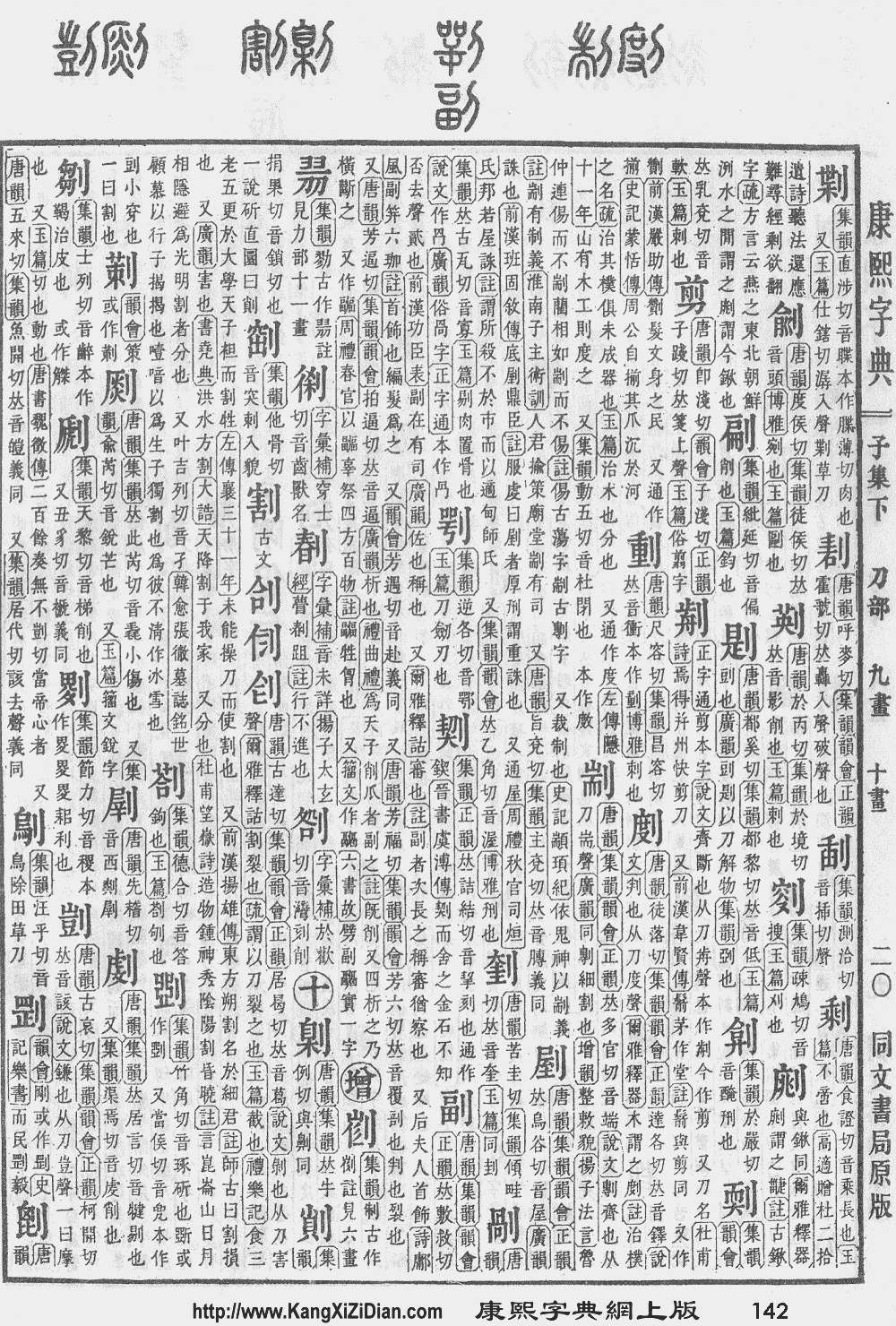
- KangXi: page 142, character 29
- Hanyu Da Zidian: volume 1, page 350, character 12
- Unihan data for U+34F7
Chinese
| simp. and trad. |
㓷 | |
|---|---|---|
Pronunciation
- Mandarin
- (Standard Chinese)+
- Pinyin:
- Zhuyin: ㄧˋ
- Wade-Giles: i4
- Gwoyeu Romatzyh: yih
- IPA (key): /i⁵¹/
- (Standard Chinese)+
- Cantonese
- (Standard Cantonese, Guangzhou)+
- Jyutping: ji6, nau4
- Yale: yih, nàuh
- Cantonese Pinyin: ji6, nau4
- Guangdong Romanization: yi6, neo4
- IPA (key): /jiː²²/, /nɐu̯²¹/
- (Standard Cantonese, Guangzhou)+
| Rime | |
|---|---|
| Character | 㓷 |
| Reading # | 1/1 |
| Initial (聲) | 疑 (31) |
| Final (韻) | 祭 (37) |
| Tone (調) | Departing (H) |
| Openness (開合) | Open |
| Division (等) | Chongniu III |
| Fanqie | 牛例切 |
| Reconstructions | |
| Zhengzhang Shangfang |
/ŋˠiᴇiH/ |
| Pan Wuyun |
/ŋᵚiɛiH/ |
| Shao Rongfen |
/ŋiæiH/ |
| Edwin Pulleyblank |
/ŋjiajH/ |
| Li Rong |
/ŋjɛiH/ |
| Wang Li |
/ŋĭɛiH/ |
| Bernard Karlgren |
/ŋi̯ɛiH/ |
| Expected Mandarin Reflex |
yì |
| Baxter-Sagart system 1.1 (2014) | |
|---|---|
| Character | 㓷 |
| Reading # | 1/1 |
| Modern Beijing (Pinyin) |
yì |
| Middle Chinese |
‹ ngjejH › |
| Old Chinese |
/*ŋ<r>[a][t]-s/ |
| English | cut off the nose |
Notes for Old Chinese notations in the Baxter-Sagart system: * Parentheses "()" indicate uncertain presence; | |
Definitions
㓷
This article is issued from
Wiktionary.
The text is licensed under Creative Commons - Attribution - Sharealike.
Additional terms may apply for the media files.