কপৌ
Assamese
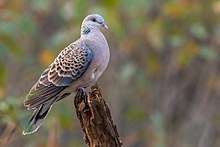
কপৌ চৰাই
Etymology
From Sanskrit कपोत (kapota), from Proto-Indo-Iranian *kapáwtas (“pigeon”).
Pronunciation
IPA(key): /kɔpɔʊ/
Alternative forms
- কপৌ চৰাই (kopou sorai)
Noun
কপৌ • (kopou)
Declension
| Inflection of কপৌ | |||
| Indefinite forms | |||
|---|---|---|---|
| absolutive | {{{abs}}} {{{abs-tr}}} | ||
| ergative | {{{erg}}} {{{erg-tr}}} | ||
| accusative | {{{acc}}} {{{acc-tr}}} | ||
| genitive | {{{gen}}} {{{gen-tr}}} | ||
| dative | {{{dat}}} {{{dat-tr}}} | ||
| instrumental | {{{ins}}} {{{ins-tr}}} | ||
| locative | {{{loc}}} {{{loc-tr}}} | ||
| Definite forms | |||
| singular | plural | ||
| absolutive | {{{abs-s}}} {{{abs-s-tr}}} |
{{{abs-p}}} {{{abs-p-tr}}} | |
| ergative | {{{erg-s}}} {{{erg-s-tr}}} |
{{{erg-p}}} {{{erg-p-tr}}} | |
| accusative | {{{acc-s}}} {{{acc-s-tr}}} |
{{{acc-p}}} {{{acc-p-tr}}} | |
| genitive | {{{gen-s}}} {{{gen-s-tr}}} |
{{{gen-p}}} {{{gen-p-tr}}} | |
| dative | {{{dat-s}}} {{{dat-s-tr}}} |
{{{dat-p}}} {{{dat-p-tr}}} | |
| instrumental | {{{ins-s}}} {{{ins-s-tr}}} |
{{{ins-p}}} {{{ins-p-tr}}} | |
| locative | {{{loc-s}}} {{{loc-s-tr}}} |
{{{loc-p}}} {{{loc-p-tr}}} | |
| Accusative Note: -ক (-k) is used for animate sense. No case marking is used for inanimate sense. Dative Note 1: In some dialects its variant -লে (-le) is used instead. Dative Note 2: In some dialects the locative marking -ত (-t) or the accusative marking -ক (-k) is used instead. Instrumental Note: In some dialects -দি (-di) marks this case instead of -ৰে (-re). | |||
masculine
Inflection of কপৌ
| Indefinite forms | Definite forms | ||||||||
|---|---|---|---|---|---|---|---|---|---|
| numeral | non-numeral (plural) | ||||||||
| singular | plural | informal | |||||||
| absolutive | কপৌ kôpôu |
কপৌটো kôpôutü |
কপৌকেইটা kôpôukeita |
কপৌবোৰ kôpôubür |
কপৌবিলাক kôpôubilak | ||||
| ergative | কপৌৱে kôpôuê |
কপৌটোৱে kôpôutüe |
কপৌকেইটাই kôpôukeitai |
কপৌবোৰে kôpôubüre |
কপৌবিলাকে kôpôubilake | ||||
| accusative | কপৌক kôpôuk |
কপৌটোক kôpôutük |
কপৌকেইটাক kôpôukeitak |
কপৌবোৰক kôpôubürok |
কপৌবিলাকক kôpôubilakok | ||||
| genitive | কপৌৰ kôpôur |
কপৌটোৰ kôpôutür |
কপৌকেইটাৰ kôpôukeitar |
কপৌবোৰৰ kôpôubüror |
কপৌবিলাকৰ kôpôubilakor | ||||
| dative | কপৌলৈ kôpôuloi |
কপৌটোলৈ kôpôutüloi |
কপৌকেইটালৈ kôpôukeitaloi |
কপৌবোৰলৈ kôpôubüroloi |
কপৌবিলাকলৈ kôpôubilakoloi | ||||
| instrumental | কপৌৰে kôpôure |
কপৌটোৰে kôpôutüre |
কপৌকেইটাৰে kôpôukeitare |
কপৌবোৰেৰে kôpôubürere |
কপৌবিলাকেৰে kôpôubilakere | ||||
| locative | কপৌত kôpôut |
কপৌটোত kôpôutüt |
কপৌকেইটাত kôpôukeitat |
কপৌবোৰত kôpôubürot |
কপৌবিলাকত kôpôubilakot | ||||
| Accusative Note: -অক (-ok) is used for animate sense. No case marking is used for inanimate sense. Dative Note 1: In some dialects -অলৈ (-oloi)'s variant -অলে (-ole) is used instead. Dative Note 2: Sometimes -অক (-ok) marks this case instead of -অলৈ (-oloi). Dative Note 3: In some dialects -অত (-ot) or -অক (-ok) marks this case instead of -অলৈ (-oloi). Instrumental Note: In some dialects -এদি (-edi) marks this case instead of -এৰে (-ere). | |||||||||
Synonyms
This article is issued from
Wiktionary.
The text is licensed under Creative Commons - Attribution - Sharealike.
Additional terms may apply for the media files.