ترنج
Persian
FWOTD – 25 May 2017
Etymology
From Middle Iranian, ultimately from Proto-Iranian *√θranč- (“به هم فشردن”). Akin to Arabic أُتْرُجّ (ʾutrujj), Aramaic תְּרוֹגָא (tərōḡā), אֶתְרוֹגָא (ʾeṯrōḡā), Classical Syriac ܛܪܘܓܐ (ṭəruggā), ܛܪܘܓܐ (ʾāṭruggā), Hebrew אֶתְרוֹג (ʾeṯrôḡ, etróg), Middle Armenian թուրինջ (tʿurinǰ), Iranian borrowings, and Sanskrit मातुलुङ्ग (mātuluṅga, “citron tree”).
Pronunciation
- (Iranian Persian) IPA(key): /toˈɾænd͡ʒ/
Noun
ترنج • (toronj, toranj)
- citron (fruit)
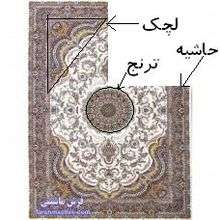
- (art) medallion created using rich arabesque patterns usually found in the center of some artworks, especially that of a (Persian) carpet, an illuminated manuscript, or in Islamic tiles
- Resalat Newspaper,
- ترنج بايد در مركز فرش قرار گيرد
- toranj bâyad dar markaz-e farš qarâr girad
- The medallion should be in the center of carpet [...]
-
- Goljaam Quarterly
- بررسی نقش نمادین ترنج در فرش ایرانی
- barresi-ye naqš-e namâdin-e toranj dar farš-e irâni
- On the Symbolic Role of Medallion in Persian Carpet
-
- Resalat Newspaper,
Synonyms
- (citron): بالنگ (bâlang)
Derived terms
- ترنجیدن (toronjidan)
Descendants
- Ottoman Turkish:
- Turkish: turunç, turuncu
References
This article is issued from
Wiktionary.
The text is licensed under Creative Commons - Attribution - Sharealike.
Additional terms may apply for the media files.