ābols
See also: Ābols
Latvian
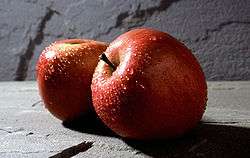
Āboļi
Etymology
From Proto-Baltic *āˀbōl, genitive *āˀbeles (from this paradigm, the two forms ābols (“apple”) and ābele (“apple tree”) were later differentiated), from Proto-Indo-European *h₂ébl̥, *h₂ebōl, a word which some consider a borrowing from some pre-Indo-European language. Cognates include Lithuanian obuolỹs, Proto-Slavic *ablъko (Old Church Slavonic аблъко (ablŭko), Russian яблоко (jábloko)), Proto-Celtic *abalom (Old Irish uball, Irish úll, Scottish Gaelic ubhal), Proto-Germanic *aplaz (English apple, German Apfel, Dutch appel, Swedish äpple).[1]
Pronunciation
- IPA(key): [âːbuols]
| (file) |
Noun
ābols m (1st declension)
- apple fruit
- salds, skābs, sulīgs ābols ― sweet, sour, juicy apple
- ābolu sula, vīns, ievārījums ― apple juice, wine, jam
- ābola serde, sēklas, miza ― apple core, seeds, skin
- sārts, vesels kā ābols ― rosy, healthy as an apple
- žāvēti āboli ― dried apples
-
Declension
Declension of ābols (1st declension)
Derived terms
Related terms
References
- ↑ Karulis, Konstantīns (1992), “ābele”, in Latviešu Etimoloģijas Vārdnīca (in Latvian), Rīga: AVOTS, →ISBN
This article is issued from
Wiktionary.
The text is licensed under Creative Commons - Attribution - Sharealike.
Additional terms may apply for the media files.