zoss
Latvian
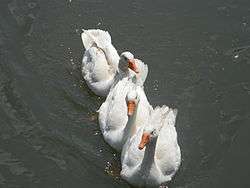
Zosis
Etymology
From earlier *zosis, from Proto-Baltic *žans-is, from Proto-Indo-European *ǵʰans- (“goose”), apparently of onomatopoeic (imitative) origin. The g in the Slavic cognates is either a dialectal phenomenon or the result of an old stem variant. Cognates include Lithuanian žąsìs, Old Prussian sansy ([zansi]), Proto-Slavic *gǫsь (Russian, Ukrainian, Belarusian гусь (gus'), Bulgarian гъска (gǎ́ska), Czech hus, husa, Polish gęś), Old High German gans, Old Norse gás, Old English gōs, German Gans, English goose, Old Irish géiss (“swan”), Sanskrit हंसः (haṁsáḥ), Latin ānser (< *hānser).[1]
Pronunciation
- IPA(key): [zùos]
Noun
zoss f (6th declension)
- goose (several birds of the tribe Anatini or subfamily Anatinae of the Anatidae family, genera Anser, Branta, and Chen)
- zosu bars ― a flock of geese
- zosu spalvas ― goose feathers
- zoss cepetis ― goose roast
- meža zoss ― wild (lit. forest) goose
- pelēkā zoss ― gray goose
-
Declension
Declension of zoss (6th declension)
| singular (vienskaitlis) | plural (daudzskaitlis) | |
|---|---|---|
| nominative (nominatīvs) | zoss | zosis |
| accusative (akuzatīvs) | zosi | zosis |
| genitive (ģenitīvs) | zoss | zosu |
| dative (datīvs) | zosij | zosīm |
| instrumental (instrumentālis) | zosi | zosīm |
| locative (lokatīvs) | zosī | zosīs |
| vocative (vokatīvs) | zoss | zosis |
Derived terms
References
- ↑ Karulis, Konstantīns (1992), “zoss”, in Latviešu Etimoloģijas Vārdnīca (in Latvian), Rīga: AVOTS, →ISBN
This article is issued from
Wiktionary.
The text is licensed under Creative Commons - Attribution - Sharealike.
Additional terms may apply for the media files.