wort
English
Pronunciation
- (Received Pronunciation) IPA(key): /wɜːt/
- (General American) IPA(key): /wɝt/
- Rhymes: -ɜː(ɹ)t
Etymology 1
From Middle English wort, wurt, wirte, from Old English wyrt (“herb, vegetable, plant, crop, root”), from Proto-Germanic *wurtiz, from Proto-Indo-European *wréh₂ds. Cognate with German Wurz (“herb, root”), Danish urt (“herb”), Swedish ört (“herb”), Icelandic jurt (“herb”), Latin rādix (“root”). More at root.
Noun
wort (plural worts)
- (archaic) A plant; herb; vegetable.
- 1621, Democritus Junior [pseudonym; Robert Burton], The Anatomy of Melancholy, Oxford: Printed by Iohn Lichfield and Iames Short, for Henry Cripps, OCLC 216894069; The Anatomy of Melancholy: […], 2nd corrected and augmented edition, Oxford: Printed by John Lichfield and James Short, for Henry Cripps, 1624, OCLC 54573970, (please specify |partition=1, 2, or 3)::
- he drinks water, and lives on wort leaves, pulse, like a hogg, or scraps like a dog […].
- 1845, Rev. Jeremy Taylor, Works:
- It is an excellent pleasure to be able to take pleasure in worts and water, in bread and onions, for then a man can never want pleasure when it is so ready for him, that nature hath spread it over all its provisions.
-
- Any of various plants or herbs. The word is usually used in combination to refer to specific plants, e.g. St. John’s wort; however, it may be used on its own as a generic term.
Derived terms
- adder's wort
- adderwort
- American lungwort
- asterwort
- awlwort
- banewort
- barrenwort
- bearwort
- bellwort
- birthwort
- bishop's wort
- bitterwort
- bladderwort
- blawort
- bloodwort
- blue navelwort
- blue throatwort
- blushwort
- bogwort
- boragewort
- bridewort
- brimstonewort
- brotherwort
- brownwort
- bruisewort
- bugwort
- bullock's lungwort
- bullwort
- burstwort
- butterwort
- cancerwort
- catwort
- clown's ringwort
- colewort
- common ragwort
- coralwort
- cow's lungwort
- crosswort
- damewort
- danewort
- dragonwort
- dropwort
- dungwort
- earwort
- ebony spleenwort
- elderwort
- European pillwort
- fanwort
- felonwort
- feltwort
- felwort
- feverwort
- figwort
- flapwort (Rachicallis americana, syn. Rachicallis rupestris)
- fleawort
- flukewort
- French lungwort
- frostwort
- fumewort
- galewort
- garlicwort
- gentianwort
- German madwort
- gipsywort
- glasswort
- golden lungwort
- golden ragwort
- goutwort
- greater spearwort
- gutwort
- gypsywort
- hammerwort
- hartwort
- heathwort
- hemlock dropwort
- hillwort
- hogwort
- holewort
- honewort
- honeywort
- hoodwort
- hornwort
- ironwort
- kelpwort
- kidneywort
- knotwort
- laserwort
- lazarwort
- leadwort
- lesser spearwort
- lichwort
- lilywort
- liverwort
- lousewort
- lungwort
- lustwort
- madderwort
- madwort
- maidenhair spleenwort
- mallowwort
- marsh pennywort
- marshwort
- masterwort
- maudlinwort
- maywort
- meadowwort
- milkwort
- miterwort
- mitrewort
- modiwort
- moneywort
- moonwort
- moorwort
- motherwort
- moudiewort
- moudiwort
- mountain spiderwort
- mowdiewort
- mudwort
- mugwort
- mulewort
- nailwort
- navelwort
- nettlewort
- nipplewort
- peachwort
- pearlwort
- pennywort
- pepperwort
- peterwort
- pilewort
- pillwort
- pipewort
- quillwort
- quinsywort
- rattlewort
- ribwort
- rosewort
- rupturewort
- saltwort
- sandwort
- sawwort
- scorpionwort
- scurvywort
- sea lungwort
- sea milkwort
- sea ragwort
- sea sandwort
- sea starwort
- setterwort
- sicklewort
- sleepwort
- slipperwort
- sneezewort
- soapwort
- sparrowwort
- spearwort
- spiderwort
- spleenwort
- spoonwort
- springwort
- spurwort
- St. James' wort
- St. John's wort
- St. Peter's wort
- stabwort
- staggerwort
- staithwort
- standerwort
- starwort
- staverwort
- stinkwort
- stitchwort
- stonewort
- strapwort
- sulphurwort
- swallowwort
- sweetwort
- talewort
- tetterwort
- thoroughwort
- throatwort
- thrumwort
- toothwort
- towerwort
- tree lungwort
- trophywort
- wall pennywort
- wallwort
- wartwort
- water dropwort
- water figwort
- water pennywort
- water starwort
- waterwort
- white navelwort
- white swallowwort
- willowwort
- wortlore
- woundwort
- yellow starwort
- yellowwort
Translations
See also

Etymology 2
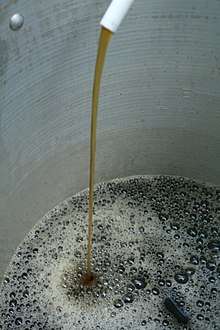
From Middle English wort, worte, from Old English wyrt, wyrte (“brewing wort, new beer, spice”), from Proto-Germanic *wurtijō (“spice”), from Proto-Indo-European *wr̥h₂d- (“sprout, root”). Cognate with Dutch wort (“wort”), German Würze (“wort, seasoning, spice”), Danish urt (“beer wort”), Swedish vört (“beer wort”).
Noun
wort (uncountable)
- (brewing) Liquid extract from the ground malt and grain soaked in hot water, the mash, as one of the steps in making beer.
Translations
See also
Anagrams
Alemannic German
Noun
wort
References
- Umberto Patuzzi, ed., (2013) Ünsarne Börtar, Luserna: Comitato unitario delle linguistiche storiche germaniche in Italia / Einheitskomitee der historischen deutschen Sprachinseln in Italien.
Dutch
Pronunciation
Audio (file)
Noun
wort n (uncountable)
- wort (unfermented beer)
Middle Dutch
Etymology
From Old Dutch wort, from Proto-Germanic *wurdą, from Proto-Indo-European *werdʰh₁om.
Noun
wort n, f
Inflection
This noun needs an inflection-table template.
Alternative forms
Descendants
Further reading
- “wort”, in Vroegmiddelnederlands Woordenboek, 2000
- “wort (I)”, in Middelnederlandsch Woordenboek, 1929
Middle High German
Etymology
From Old High German wort.
The sense verb is a literal translation of Latin verbum.
Noun
wort n
- word
- (grammar) verb
- 14th century, Heinrich von Mügeln. Normalised spellings: 1867, Karl Julis Schröer, Die Dichtungen Heinrichs von Mügeln (Mogelîn) nach den Handschriften besprochen, Wien, p. 476:
- Nam, vornam, wort, darnâch
- zûwort, teilfanc, zûfûg ich sach,
- vorsatz, înworf under irem dach
- gemunzet und geformet stân.
- 14th century, Heinrich von Mügeln. Normalised spellings: 1867, Karl Julis Schröer, Die Dichtungen Heinrichs von Mügeln (Mogelîn) nach den Handschriften besprochen, Wien, p. 476:
Descendants
Old Dutch
Etymology
From Proto-Germanic *wurdą, from Proto-Indo-European *werdʰo-. Compare Old High German wort, Old Saxon, Old Frisian, and Old English word, Old Norse orð.
Noun
wort n
Declension
Descendants
- Dutch: woord
Old High German
Etymology
From Proto-Germanic *wurdą, whence also Old Dutch wort, Old Saxon and Old English word, Old Norse orð, Gothic 𐍅𐌰𐌿𐍂𐌳 (waurd). Ultimately from Proto-Indo-European *werdʰo-.
The sense verb is a literal translation of Latin verbum.
Pronunciation
- IPA(key): /ˈwort/
Noun
wort n
Declension
| case | singular | plural |
|---|---|---|
| nominative | wort | wort |
| accusative | wort | wort |
| genitive | wortes | worto |
| dative | worte | wortum |
| instrumental | wortu | — |