tunic
English
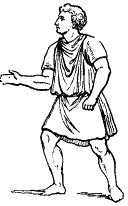
A Roman dressed in a tunic.

A young boy in tunic and trousers.
Alternative forms
- tunick (obsolete)
Etymology
Middle French tunique, from Latin tunica, possibly from Semitic[1]; see also Aramaic [script needed] (kittuna), Hebrew כותנתה (kuttoneth, “coat”); or from Etruscan. Existed in Old English as "tunece"; unknown if term was lost and then reborrowed later.
Pronunciation
- IPA(key): /tjuːnɪk/, /tunɪk/
- Rhymes: -uːnɪk
Noun
tunic (plural tunics)
- A garment worn over the torso, with or without sleeves, and of various lengths reaching from the hips to the ankles.
- 1963, Margery Allingham, chapter 19, in The China Governess:
- As soon as Julia returned with a constable, Timothy, who was on the point of exhaustion, prepared to give over to him gratefully. The newcomer turned out to be a powerful youngster, fully trained and eager to help, and he stripped off his tunic at once.
-
Translations
garment
- ↑ The American Journal of Semitic Languages and Literatures, Volume 18
Anagrams
This article is issued from
Wiktionary.
The text is licensed under Creative Commons - Attribution - Sharealike.
Additional terms may apply for the media files.