queijo
Old Portuguese
Etymology
From Latin cāseus (“cheese”), possibly from Proto-Indo-European *kwat- (“to ferment, become sour”). Cognate with Old Leonese keso and Old Spanish queso.
Pronunciation
- IPA(key): /ˈkej.d͡ʒo/
Noun
queijo m
- cheese
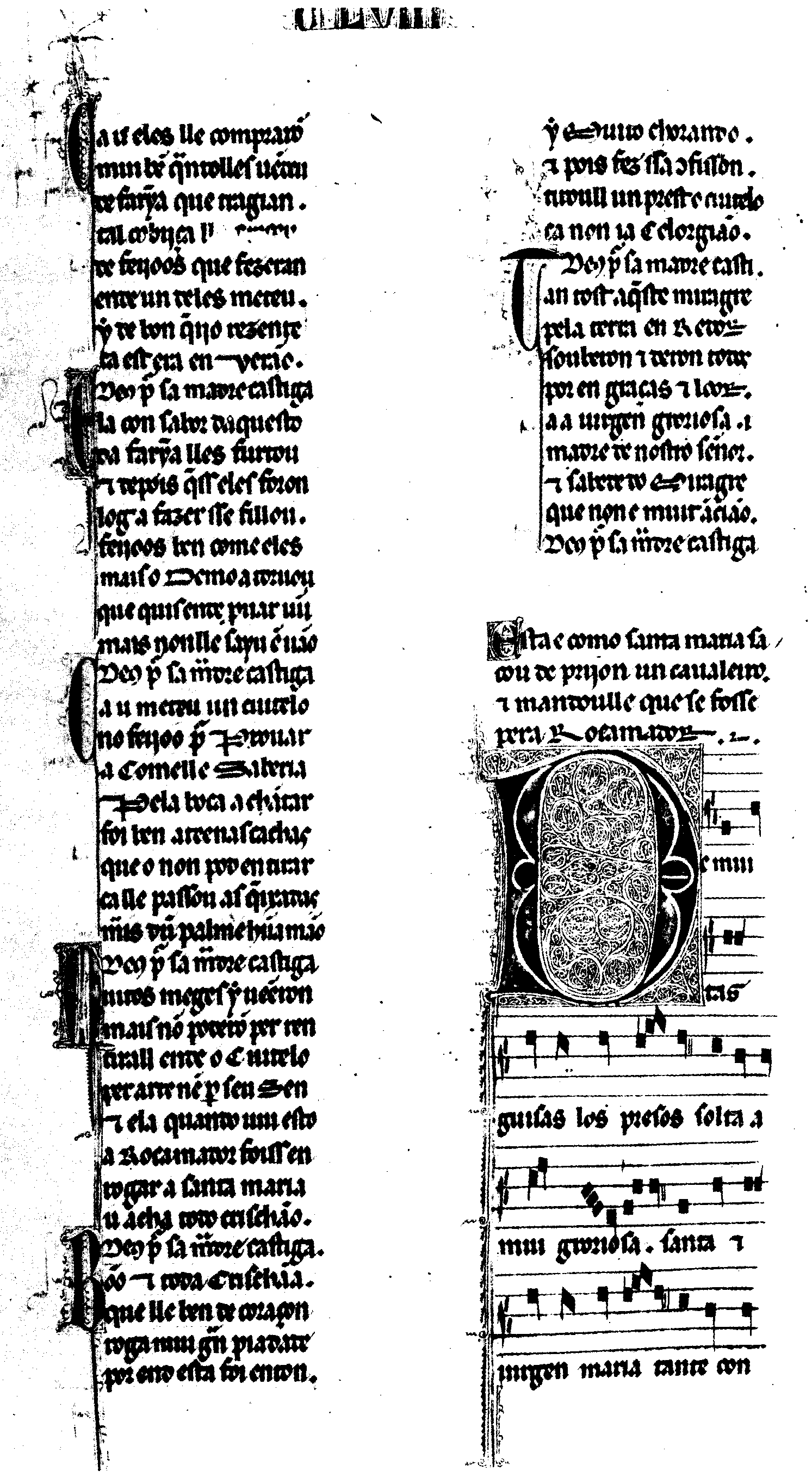
- 13th century, attributed to Alfonso X of Castile, Cantigas de Santa Maria, E codex, cantiga 157 (facsimile):
- bon q̇ijo rezente
- good fresh cheese
-
- 13th century, attributed to Alfonso X of Castile, Cantigas de Santa Maria, E codex, cantiga 157 (facsimile):
Descendants
Portuguese
queijo
Etymology
From Old Portuguese queijo (“cheese”), from Latin cāseus (“cheese”), possibly from Proto-Indo-European *kwat- (“to ferment, become sour”). Cognate with Galician queixo, Spanish queso, Italian cacio, Romanian caș and English cheese.
Pronunciation
- (Portugal) IPA(key): /ˈkɐj.ʒu/, /ˈkej.ʒu/
-
Audio (file)
-
- (Brazil) IPA(key): /ˈke(j).ʒu/
- (South Brazil) IPA(key): /ˈke(j).ʒo/
- Hyphenation: quei‧jo
Noun
queijo m (plural queijos)
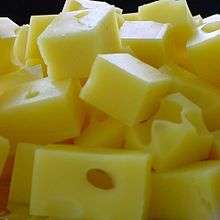
- cheese (dairy product)
Derived terms
Terms derived from queijo
|
|
Related terms
Descendants
This article is issued from
Wiktionary.
The text is licensed under Creative Commons - Attribution - Sharealike.
Additional terms may apply for the media files.