kaķis
See also: kakis
Latvian
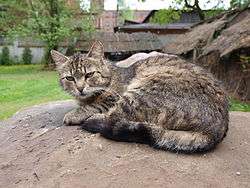
Kaķis
Etymology
Old word, which spread together with the animal millennia ago, apparently ultimately of African origin, later borrowed into Proto-Indo-European. The Latvian term was apparently influenced by the Germanic forms: kaķis < *katis, from feminine *kate (cf. dialectal katene (“kitten”)), at first in Couronian dialects, later in other dialects and in the standard language. Cognates include Lithuanian katė̃, Old Prussian catto ([kato]), Russian кот (kot), Middle High German, Middle Dutch katte, German Katze, English cat, Latin cattus, catta.[1]
Pronunciation
- IPA(key): [ˈkacis]
| (file) |
Noun
kaķis m (2nd declension)
- domestic cat (Felis silvestris catus)
- melns kaķis ― black cat
- kaķis murrā ― the cat purrs
- kaķis noķēris peli ― the cat caught a mouse
- veikls kā kaķis ― neat as a cat
- acis kā kaķim ― eyes like a cat's (= good vision)
-
Declension
Declension of kaķis (2nd declension)
Derived terms
See also
References
- ↑ Karulis, Konstantīns (1992), “kaķis”, in Latviešu Etimoloģijas Vārdnīca (in Latvian), Rīga: AVOTS, →ISBN
- kaķis in some Latvian dictionary at tezaurs.lv
This article is issued from
Wiktionary.
The text is licensed under Creative Commons - Attribution - Sharealike.
Additional terms may apply for the media files.