jardin
French
Etymology
From Middle French jardin, from Old French jardin, ("garden, enclosure", probably from Vulgar Latin or early Gallo-Romance hortus gardinus, from Old Frankish *gardin, oblique case of *gardo (“enclosure, yard”) (compare also Old French jart (“garden”))), from Proto-Germanic *gardô (“enclosure, garden, house”), from Proto-Indo-European *gʰordʰos (“hedge, enclosure”), from Proto-Indo-European *gʰerdʰ- (“court, yard”). Cognate with Old High German gart, garto (“garden, enclosure, yard”), Old English ġeard (“garden, yard, fence, enclosure”). Cognate with English garden, which was derived from an Anglo-Norman/Old Northern French variant. More at yard.
Pronunciation
- IPA(key): /ʒaʁ.dɛ̃/
-
audio (file)
Noun
jardin m (plural jardins)
Derived terms
Related terms
Further reading
- “jardin” in le Trésor de la langue française informatisé (The Digitized Treasury of the French Language).
Interlingua
Noun
jardin (plural jardines)
Mirandese
Noun
jardin m (plural jardines)
Occitan
Pronunciation
- IPA(key): [(d)ʒarˈdi]
Noun
jardin m (plural jardins)
Old French
Noun
jardin m (oblique plural jardins, nominative singular jardins, nominative plural jardin)
- Alternative form of gardin
Old Portuguese
Etymology
From Old French jardin (“garden, enclosure”), probably from Vulgar Latin or early Gallo-Romance hortus gardinus, from Old Frankish *gardin, oblique case of *gardo (“enclosure, yard”), from Proto-Germanic *gardô (“enclosure, garden, house”), from Proto-Indo-European *gʰordʰos (“hedge, enclosure”), from *gʰerdʰ- (“court, yard”).
Pronunciation
- IPA(key): /d͡ʒaɾˈdĩ/
Noun
jardin m
- garden
- (figuratively, Christianity) Heaven
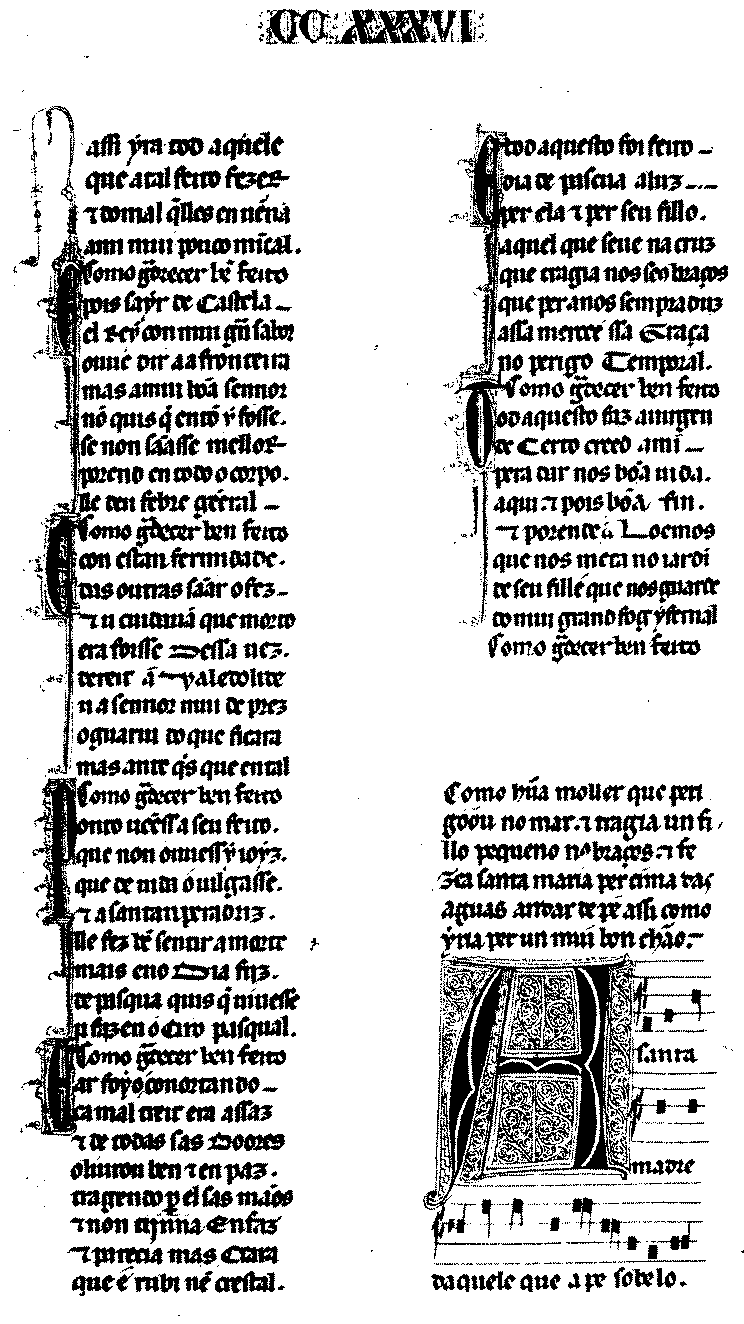
- 13th century, attributed to Alfonso X of Castile, Cantigas de Santa Maria, E codex, cantiga 235 (facsimile):
- […] a Loemos que nos meta no iardi[n] / de ſeu fille que nos guarde do mui grand fogỹfernal.
- […] let us praise Her so that She will admit us to the garden of Her Son (=Heaven) and save us from the great fire of Hell.
- […] a Loemos que nos meta no iardi[n] / de ſeu fille que nos guarde do mui grand fogỹfernal.
- 13th century, attributed to Alfonso X of Castile, Cantigas de Santa Maria, E codex, cantiga 235 (facsimile):