harlequin
See also: Harlequin
English
Etymology
From Middle French Harlequin (in Italian Arlecchino, the name of a popular servant character in commedia dell'arte plays), from Old French *Harlequin, *Halequin, *Herlequin, *Hellequin (a demon, malevolent spirit), connected to the Old English figure of Herla Cyning (“King Herla”, a mythical figure identified with Woden).
Pronunciation
Noun
harlequin (plural harlequins)
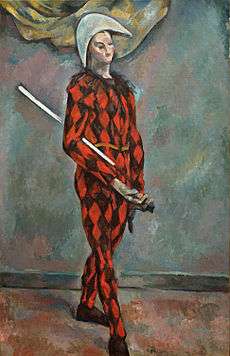
- A pantomime fool, typically dressed in checkered colorful clothes.
- 1749, Henry Fielding, The History of Tom Jones, a Foundling:
- […] were certainly the worst and dullest company into which an audience was ever introduced; and (which was a secret known to few) were actually intended so to be, in order to contrast the comic part of the entertainment, and to display the tricks of harlequin to the better advantage.
-
- A greenish-chartreuse color.
- harlequin colour:
Usage notes
- Because of its origin in the name of an Italian theatrical character, Harlequin is often used as a proper noun.
Translations
pantomime fool
|
|
Adjective
harlequin (not comparable)
- Brightly colored, especially in a pattern like that of a harlequin clown's clothes.
- Of a greenish-chartreuse color.
Derived terms
Terms derived from harlequin
|
|
|
Translations
brightly colored
|
|
Verb
harlequin (third-person singular simple present harlequins, present participle harlequining, simple past and past participle harlequined)
This article is issued from
Wiktionary.
The text is licensed under Creative Commons - Attribution - Sharealike.
Additional terms may apply for the media files.