garganta
Galician
Etymology
From Proto-Indo-European *gʷrh₃g-nt- (“throat”), whence Proto-Celtic *brāgant- (“neck, throat”), from Proto-Indo-European *gʷerh₃- (“to shallow”).[1][2] Alternatively, onomatopoeic.[3]
Pronunciation
- IPA(key): /ɡaɾˈɣanta̝/
Noun
garganta f (plural gargantas)
Synonyms
- (throat): gorxa
- (gorge): desfiladeiro
Derived terms
- gargantada
- gargantilla
Related terms
- gargallo
References
- “garganta” in Dicionario de Dicionarios do galego medieval, SLI - ILGA 2006-2012.
- “garganta” in Xavier Varela Barreiro & Xavier Gómez Guinovart: Corpus Xelmírez - Corpus lingüístico da Galicia medieval. SLI / Grupo TALG / ILG, 2006-2016.
- “garganta” in Dicionario de Dicionarios da lingua galega, SLI - ILGA 2006-2013.
- “garganta” in Santamarina, Antón (coord.): Tesouro informatizado da lingua galega. Santiago de Compostela: Instituto da Lingua Galega.
- “garganta” in Álvarez, Rosario (coord.): Tesouro do léxico patrimonial galego e portugués, Santiago de Compostela: Instituto da Lingua Galega.
- ↑ Matasović, Ranko (2009) Etymological Dictionary of Proto-Celtic (Leiden Indo-European Etymological Dictionary Series; 9), Leiden: Brill, →ISBN, page 72-73
- ↑ Bascuas, Edelmiro (2002). Estudios de hidronimia paleoeuropea gallega. Santiago de Compostela: Universidade, Servicio de Publicacións e Intercambio Científico. p. 330-331. →ISBN.
- ↑ Coromines, Joan; Pascual, José A. (1991–1997). Diccionario crítico etimológico castellano e hispánico. Madrid: Gredos, s.v. garganta.
Occitan
Pronunciation
- IPA(key): [ɡarˈɡanto]
Noun
garganta f (plural gargantas)
Papiamentu
Etymology
From Portuguese garganta and Spanish garganta.
Noun
garganta
Portuguese
Etymology
From Old Portuguese garganta, of onomatopoeic origin.
Pronunciation
- (Portugal) IPA(key): /ɡɐɾ.ˈɣɐ̃.tɐ/
- Hyphenation: gar‧gan‧ta
Noun
garganta f (plural gargantas)
Spanish
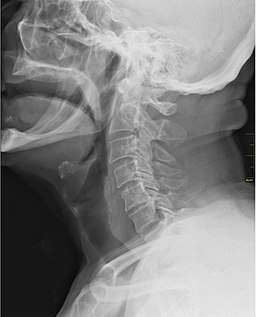
Garganta a la izquierda de la altura media de la imagen (throat in the left middle height of image).
Etymology
Onomatopoeic, garg
Pronunciation
- IPA(key): [ɣ̞a̠ɾˈɣ̞a̠n.ta̠], [ɡa̠ɾˈɡa̠n.ta̠]
Noun
garganta f (plural gargantas)
Hypernyms
- cuello m
Hyponyms
This article is issued from
Wiktionary.
The text is licensed under Creative Commons - Attribution - Sharealike.
Additional terms may apply for the media files.