faísca
Galician
Etymology
From Old Portuguese faisca, or the specifically Galician feysca, attested in Medieval Latin as falisca. From Proto-Germanic *falwiskǭ (“spark, ash over burning ambers”),[1] from Proto-Germanic *falwaz (“fallow”) from Proto-Indo-European *polʷos. Cognate with Portuguese faísca and Asturian falisca. Compare also Old High German falawisca (“hot ashes”), Old Norse fǫlski (“ash over burning ambers”), and French flammèche.
Pronunciation
- IPA(key): /faˈiska̝/
Noun
faísca f (plural faíscas)
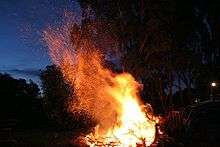
- spark (detached from burning material)
- c. 1300, R. Martínez López (ed.), General Estoria. Versión gallega del siglo XIV. Oviedo: Publicacións de Archivum, page 209:
- et vio sayr ẽno ayre feyscas et moxenas da terra [asi] cõmo de forno que arde
- and he saw embers and sparks emerging from the land and going into the air, as from an burning oven
- et vio sayr ẽno ayre feyscas et moxenas da terra [asi] cõmo de forno que arde
- c. 1300, R. Martínez López (ed.), General Estoria. Versión gallega del siglo XIV. Oviedo: Publicacións de Archivum, page 209:
Synonyms
References
- “feysca” in Dicionario de Dicionarios do galego medieval, SLI - ILGA 2006-2012.
- “faisca” in Dicionario de Dicionarios da lingua galega, SLI - ILGA 2006-2013.
- “faísca” in Santamarina, Antón (coord.): Tesouro informatizado da lingua galega. Santiago de Compostela: Instituto da Lingua Galega.
- “faísca” in Álvarez, Rosario (coord.): Tesouro do léxico patrimonial galego e portugués, Santiago de Compostela: Instituto da Lingua Galega.
- ↑ Coromines, Joan; Pascual, José A. (1991–1997). Diccionario crítico etimológico castellano e hispánico. Madrid: Gredos, s.v. chispa.
Portuguese
Etymology
From Old Portuguese faisca, feisca (attested in Medieval Latin as falisca), of uncertain origin. Possibly from Proto-Germanic *falwiskō(n), or from Vulgar Latin *favillesca, from favilla (“embers”). Cognate with Galician faísca and Asturian falisca. Compare also Middle French falivoche, Old High German valwische, Old Italian falavesca, Old Norse fǫlski, Old Spanish fuisca and Swedish falaska.
Pronunciation
- (Portugal) IPA(key): /fɐ.ˈiʃ.kɐ/
- Hyphenation: fa‧ís‧ca
Noun
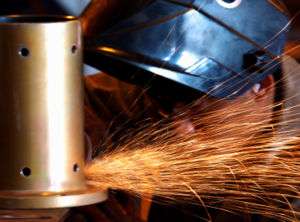
faísca f (plural faíscas)
Synonyms
- See Thesaurus:faísca