dulse
English
WOTD – 23 December 2009
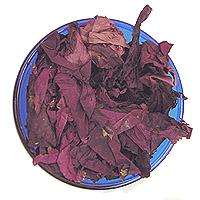
A plate of dulse.
Alternative forms
Etymology
From Irish duileasc, Scottish Gaelic duileasg; compare Welsh delysg.
Pronunciation
Noun
dulse (usually uncountable, plural dulses)
- A seaweed of a reddish-brown color (Palmaria palmata) which is sometimes eaten, as in Scotland.
- 1997, ‘Egil's Saga’, tr. Bernard Scudder, The Sagas of Icelanders, Penguin 2001, page 151:
- Then Egil said, ‘That happens if you eat dulse, it makes you even thirstier.’
- 2002, Joseph O'Connor, Star of the Sea, Vintage 2003, page 90:
- They worked together on their father's patch: desperately, hungrily, from dawn to nightfall; dragging up dulse from the shore to nourish the stones; [...] but nothing much grew except their own sense of separation.
- 1997, ‘Egil's Saga’, tr. Bernard Scudder, The Sagas of Icelanders, Penguin 2001, page 151:
Derived terms
- shell dulse
Translations
reddish brown seaweed that is eaten
See also
-

Anagrams
Cebuano
Etymology
From Spanish dulce (“candy, sweets, dessert”), from Latin dulcis.
Noun
dulse
Synonyms
Ladino
Etymology
Adjective
dulse ? (Latin spelling)
Noun
dulse m (Latin spelling)
- sweet preserves
This article is issued from
Wiktionary.
The text is licensed under Creative Commons - Attribution - Sharealike.
Additional terms may apply for the media files.