drāna
See also: drānā
Latvian
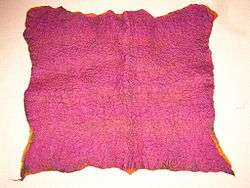
Drāna
Etymology
From Proto-Indo-European *der-, *dr- (“to tear, rip, split”) (whence also dīrāt (“to skin, flay”)), with a suffix *-eh₂, yielding *dr-eh₂ > drā-, and another suffix, either *-no-/*-nā-, or (according to Pokorny) *-p-an, with the p later reducing to zero (but still conserved in the Lithuanian and Sanskrit cognates). The semantic evolution was problably: “to skin” > “skin, fur” > “fabric”. Cognates include Lithuanian drãpana (“clothes, costume”) (dialectal also “handkerchief”, “piece of cloth”), Sanskrit द्रापिः (drāpíḥ, “coat, attire”).[1]
Pronunciation
- IPA(key): [drāːna]
| (file) |
Noun
drāna f (4th declension)
- fabric (cloth, material made of fibers)
- vilnas, zīda, linu drāna ― wool, slik, linen cloth
- aizkaru drāna ― curtain cloth
- rūtota drāna ― checked fabric
-
- piece of cloth, handkerchief
- kabatas drāna ― pocket handkerchief
-
- (only plural) clothes, garments
- ģērbties gaišās drānās ― to dress in bright clothes
-
Declension
Declension of drāna (4th declension)
Synonyms
- (fabric): audums
- (clothes): drēbe
Derived terms
References
- ↑ Karulis, Konstantīns (1992), “drāna”, in Latviešu Etimoloģijas Vārdnīca (in Latvian), Rīga: AVOTS, →ISBN
This article is issued from
Wiktionary.
The text is licensed under Creative Commons - Attribution - Sharealike.
Additional terms may apply for the media files.