columba
See also: Columba
Latin
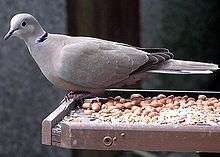
columba (a dove)
Etymology
From Ancient Greek κόλυμβος (kólumbos, “a diver”), from κολυμβάω (kolumbáō, “dive, plunge headlong, swim”). (Aristophanes [Birds, 304] and others use the word κολυμβίς (kolumbís, “diver, sea-bird”))
Pronunciation
- (Classical) IPA(key): /koˈlum.ba/, [kɔˈɫʊm.ba]
Noun
columba f (genitive columbae); first declension (masculine columbus)
- dove, pigeon (sacred bird of Venus)
- a term of endearment
Inflection
First declension.
| Case | Singular | Plural |
|---|---|---|
| nominative | columba | columbae |
| genitive | columbae | columbārum |
| dative | columbae | columbīs |
| accusative | columbam | columbās |
| ablative | columbā | columbīs |
| vocative | columba | columbae |
Related terms
- columbārius
- columbīnus
- columbus
Descendants
References
- columba in Charlton T. Lewis and Charles Short (1879) A Latin Dictionary, Oxford: Clarendon Press
- columba in Charlton T. Lewis (1891) An Elementary Latin Dictionary, New York: Harper & Brothers
- columba in Charles du Fresne du Cange’s Glossarium Mediæ et Infimæ Latinitatis (augmented edition, 1883–1887)
- columba in Gaffiot, Félix (1934) Dictionnaire Illustré Latin-Français, Hachette
- columba in William Smith, editor (1854, 1857) A Dictionary of Greek and Roman Geography, volume 1 & 2, London: Walton and Maberly
Romansch
Etymology
Noun
columba f (plural columbas)
This article is issued from
Wiktionary.
The text is licensed under Creative Commons - Attribution - Sharealike.
Additional terms may apply for the media files.