cavalo
Old Portuguese
Etymology
From Late Latin caballus (“horse”), from Latin caballus (“pack horse”), from Gaulish caballos.
Pronunciation
- IPA(key): /kaˈβa.lo/
Noun
cavalo m
- horse
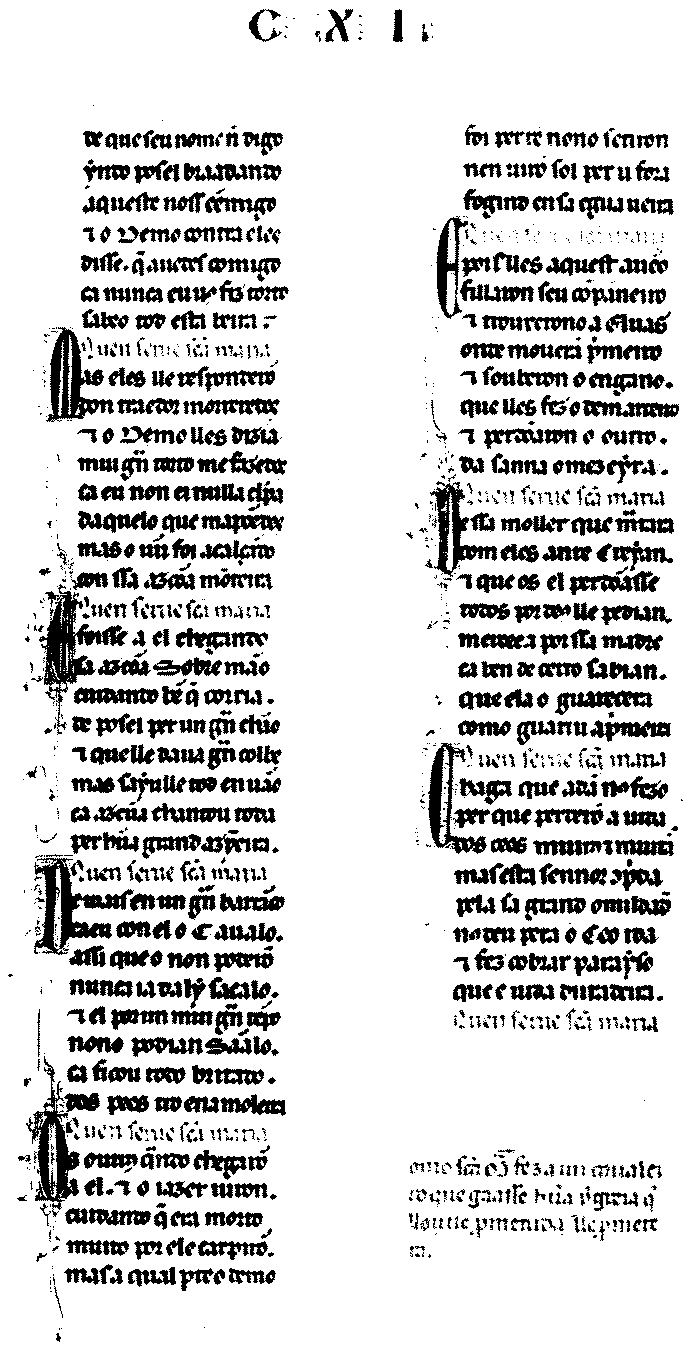
- 13th century, attributed to Alfonso X of Castile, Cantigas de Santa Maria, E codex, cantiga 213 (facsimile):
- caeu con el o Caualo
- The horse fell with him
-
- 13th century, attributed to Alfonso X of Castile, Cantigas de Santa Maria, E codex, cantiga 213 (facsimile):
Descendants
Portuguese
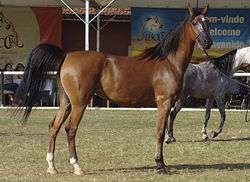
cavalo (Equus ferus caballus)
Alternative forms
- cavallo (obsolete)
Etymology
From Old Portuguese cavalo, from Late Latin caballus (“horse”), from Latin caballus (“pack horse”), from Gaulish caballos. Cognate with Galician cabalo, Spanish caballo, Catalan cavall, Occitan caval, French cheval, Italian cavallo and Romanian cal.
Pronunciation
- (Portugal) IPA(key): /kɐ.ˈva.lu/
- (Brazil) IPA(key): /ka.ˈva.lu/
- (South Brazil) IPA(key): /ka.ˈva.lo/
- Hyphenation: ca‧va‧lo
Noun
cavalo m (plural cavalos) f égua
Related terms
Terms related to cavalo
|
|
See also
| Chess pieces in Portuguese · peças de xadrez (layout · text) | |||||
|---|---|---|---|---|---|
 |
 |
_kopio.jpg) |
 |
 |
 |
| rei | rainha, dama | torre | bispo | cavalo | peão |
This article is issued from
Wiktionary.
The text is licensed under Creative Commons - Attribution - Sharealike.
Additional terms may apply for the media files.