cúigear
Irish
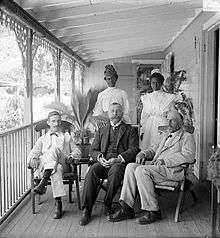
cúigear
Etymology
From Old Irish cóicer, possibly from cóic (“five”) + fer (“man”), though that may be a folk etymology.
Pronunciation
- IPA(key): /ˈkuːɟəɾˠ/
Noun
cúigear m (genitive singular cúigir, nominative plural cúigir) (triggers no mutation)
- a group of five people
- Tá cúigear mac agam.
- I have five sons.
-
Usage notes
- Generally used with the genitive plural when referring to human beings and the preposition de when referring to other things.
Declension
Declension of cúigear
First declension
|
Bare forms:
|
Forms with the definite article:
|
Related terms
- cúig (“five”) (non-personal)
Mutation
| Irish mutation | ||
|---|---|---|
| Radical | Lenition | Eclipsis |
| cúigear | chúigear | gcúigear |
| Note: Some of these forms may be hypothetical. Not every possible mutated form of every word actually occurs. | ||
References
- "cúigear" in Foclóir Gaeilge-Béarla, An Gúm, 1977, by Niall Ó Dónaill.
- “cóicer” in Dictionary of the Irish Language, Royal Irish Academy, 1913–76.
This article is issued from
Wiktionary.
The text is licensed under Creative Commons - Attribution - Sharealike.
Additional terms may apply for the media files.