angla
Esperanto
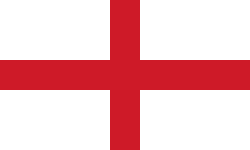
angla flago
Etymology
Adjective
angla (accusative singular anglan, plural anglaj, accusative plural anglajn)
- English (of or pertaining to England, the English people, or the English language)
- (la angla) Clipping of la angla lingvo (“the English language”).
Hypernyms
Derived terms
Terms derived from angla
|
|
|
Related terms
Terms related to angla
French
Pronunciation
Verb
angla
- third-person singular past historic of angler
Irish
Noun
angla m (genitive singular angla)
Declension
Declension of angla
Third declension
|
Bare forms (no plural of this noun)
|
Forms with the definite article:
|
Derived terms
- anglán m (“ill-tempered, quarrelsome, person”)
Mutation
| Irish mutation | |||
|---|---|---|---|
| Radical | Eclipsis | with h-prothesis | with t-prothesis |
| angla | n-angla | hangla | not applicable |
| Note: Some of these forms may be hypothetical. Not every possible mutated form of every word actually occurs. | |||
Further reading
- "angla" in Foclóir Gaeilge-Béarla, An Gúm, 1977, by Niall Ó Dónaill.
Italian
Adjective
angla f sg
- Feminine singular of adjective anglo.
Noun
angla f (plural angle, masculine anglo)
- feminine equivalent of anglo
Anagrams
Portuguese
Adjective
angla f sg
- Feminine singular of adjective anglo.
Noun
angla f sg
- Feminine singular of noun anglo.
Romani
Etymology
From Sanskrit अग्र (agra, “ahead, before, in front”). Compare Hindi आगे (āge, “ahead”).
Preposition
angla
Spanish
Pronunciation
- IPA(key): /ˈanɡla/, [ˈãŋɡla]
Adjective
angla f sg
- Feminine singular of adjective anglo.
Noun
angla f (plural anglas, masculine anglo, masculine plural anglos)
- feminine equivalent of anglo
This article is issued from
Wiktionary.
The text is licensed under Creative Commons - Attribution - Sharealike.
Additional terms may apply for the media files.