aloe
English
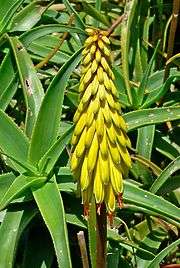
Aloe striatula, an aloe (2)
Etymology
From Old English alwe (“fragrant resin of an East Indian tree”), from Latin aloē, from Ancient Greek ἀλόη (alóē), from Hebrew אֲהָלִים, from Arabic أَلْوَة (ʾalwa), ultimately from a Dravidian language through Sanskrit कालागुरु (kālāguru, “agarwood”); reinforced in Middle English by Old French aloes.
Pronunciation
- (General American) IPA(key): /ˈæ.loʊ/
- (Received Pronunciation) IPA(key): /ˈæ.ləʊ/
- Rhymes: -æləʊ
Noun
aloe (plural aloes)
- (in the plural) The resins of the tree Aquilaria malaccensis (syn. Aquilaria agallocha), known for their fragrant aroma.
- A plant of the genus Aloe.
- A strong, bitter drink made from the juice of such plants, used as a purgative.
Usage notes
- Often used in plural (originally under influence of Old French aloes).
Derived terms
Descendants
Translations
plant of the genus Aloe
|
|
See also
Further reading
-

-

-

Anagrams
Italian
Noun
aloe m, f (invariable)
- aloe (plant)
Anagrams
Latin
Etymology
From Ancient Greek ἀλόη (alóē, “aloes”)
Pronunciation
- (Classical) IPA(key): /ˈa.lo.eː/, [ˈa.ɫɔ.eː]
Noun
aloē f (genitive aloēs); first declension
- The aloe.
- The bitter juice produced by the aloe used as a perfume, in medicine and in embalming.
- (figuratively) Bitterness (in general).
Inflection
First declension, Greek type.
| Case | Singular | Plural |
|---|---|---|
| nominative | aloē | aloae |
| genitive | aloēs | aloārum |
| dative | aloae | aloīs |
| accusative | aloēn | aloās |
| ablative | aloē | aloīs |
| vocative | aloē | aloae |
Descendants
- → Armenian: ալոէ (aloē)
- → Dutch: aloë
- → Estonian: aaloe
- → Finnish: aaloe
- → German: Aloe
- → Hungarian: aloé
- → Italian: aloe
- → Japanese: 蘆薈 (rokai)
- → Okinawan: 蘆薈 (rugwai, dugwai)
- → Old English: alwe
- Old French: aloes
- → Old Irish: aloe
- → Portuguese: aloe
- → Russian: ало́э n (alóe)
- → Scottish Gaelic: àloe
- → Serbo-Croatian:
- Cyrillic: алоја
- Latin: aloja
- → Swedish: aloe
- → Ukrainian: алое (aloe)
References
- aloe in Charlton T. Lewis and Charles Short (1879) A Latin Dictionary, Oxford: Clarendon Press
- aloe in Charlton T. Lewis (1891) An Elementary Latin Dictionary, New York: Harper & Brothers
- aloe in Charles du Fresne du Cange’s Glossarium Mediæ et Infimæ Latinitatis (augmented edition, 1883–1887)
Middle French
Etymology
Noun
aloe f (plural aloes)
- lark (bird)
References
- Godefroy, Frédéric, Dictionnaire de l'ancienne langue française et de tous ses dialectes du IXe au XVe siècle (1881) (aloe)
Old French
Noun
aloe f (oblique plural aloes, nominative singular aloe, nominative plural aloes)
- lark (bird)
References
- Godefroy, Frédéric, Dictionnaire de l'ancienne langue française et de tous ses dialectes du IXe au XVe siècle (1881) (aloe)
Portuguese
Alternative forms
Noun
aloe f (plural aloes)
- aloe (plant of the genus Aloe)
Romanian
Etymology
Noun
aloe f (plural aloe)
- aloe
- a substance extracted from the aloe plant
Declension
declension of aloe
| singular | plural | |||
|---|---|---|---|---|
| indefinite articulation | definite articulation | indefinite articulation | definite articulation | |
| nominative/accusative | (o) aloe | aloea | (niște) aloe | aloele |
| genitive/dative | (unei) aloe | aloei | (unor) aloe | aloelor |
| vocative | aloe, aloeo | aloelor | ||
Samoan
Etymology
Noun
aloe
Spanish
Noun
aloe m (plural aloes)
- Alternative form of áloe
This article is issued from
Wiktionary.
The text is licensed under Creative Commons - Attribution - Sharealike.
Additional terms may apply for the media files.